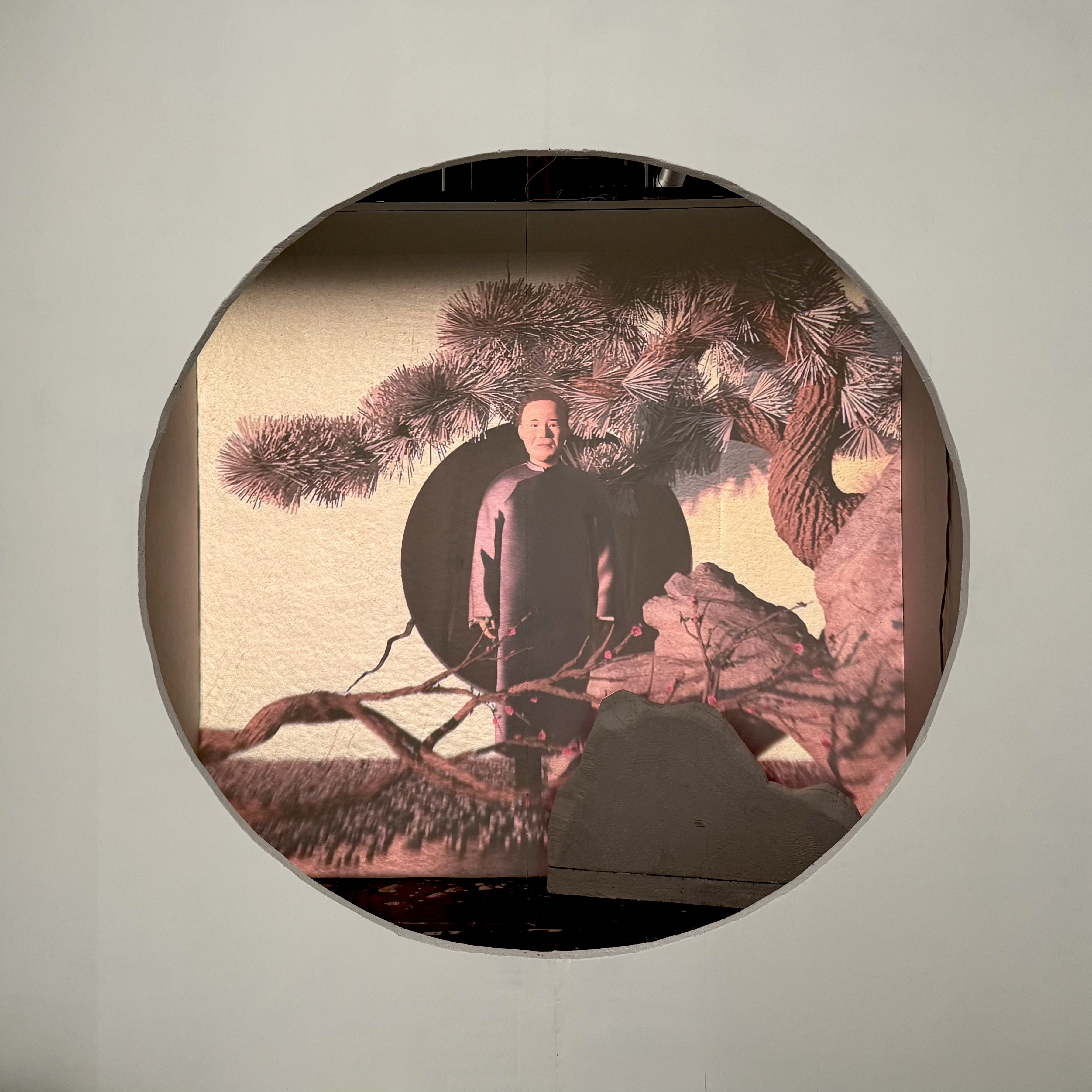
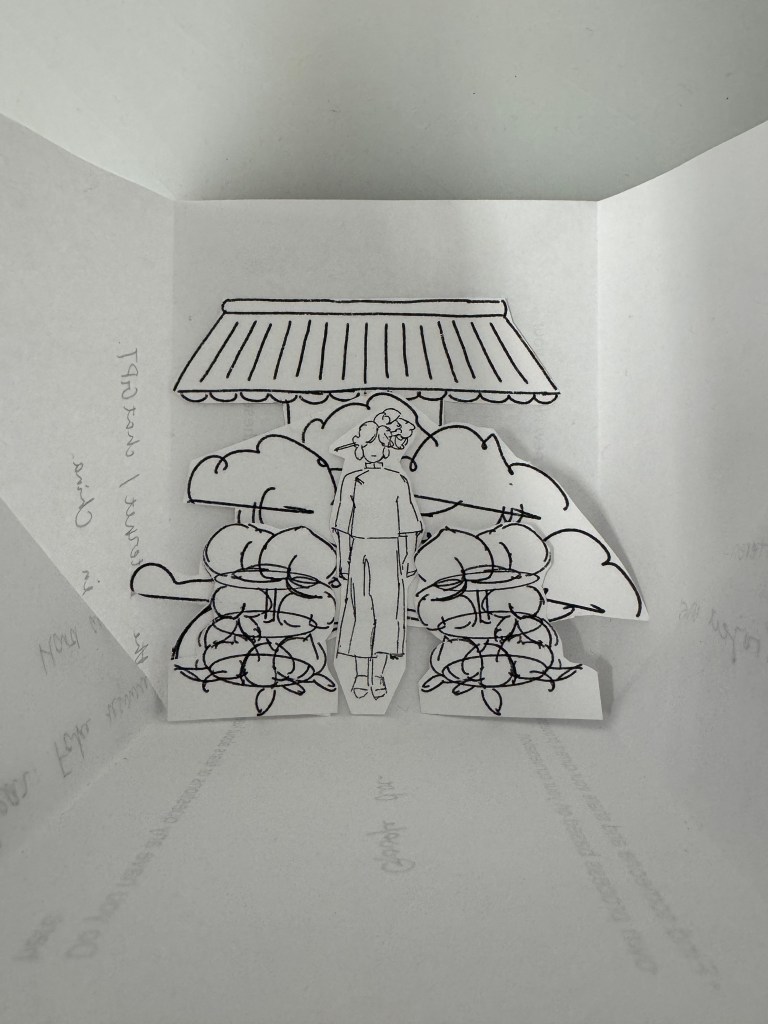
This digital sculpture, May the Pine Flourish Forever, recreates a painting in an album that our family used to possess, revealing a piece of family history and artistic legacy in the mid-20th century. The rendered scenes, in chronological order, will be projected on the exhibition wall and supported by physical installations, presenting the family’s fragility, history, culture, and process of change.
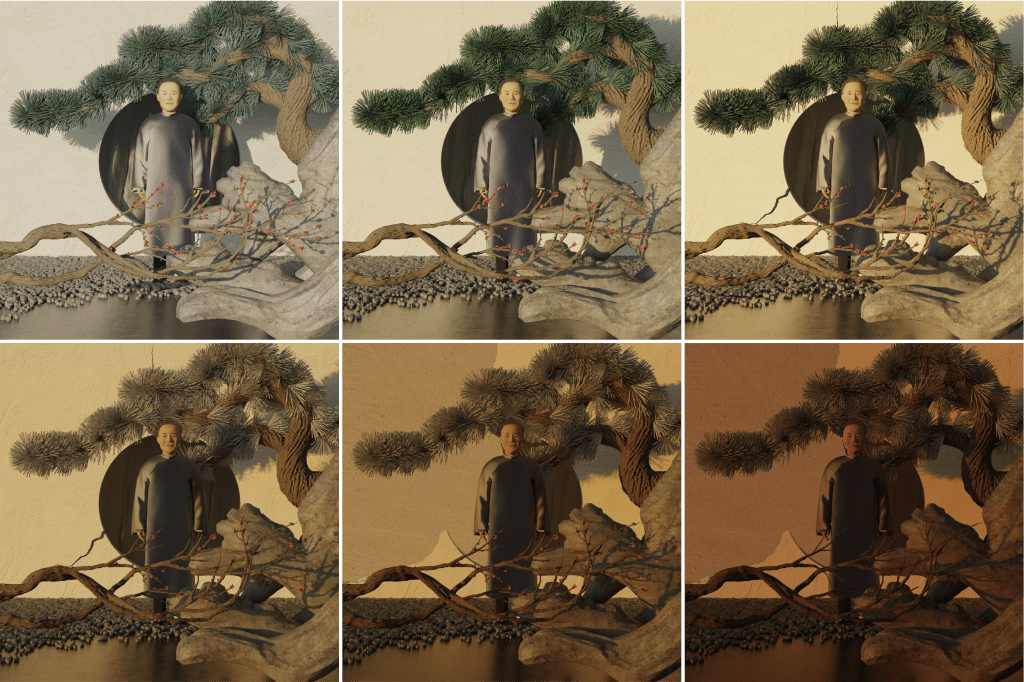
Renderings
Research
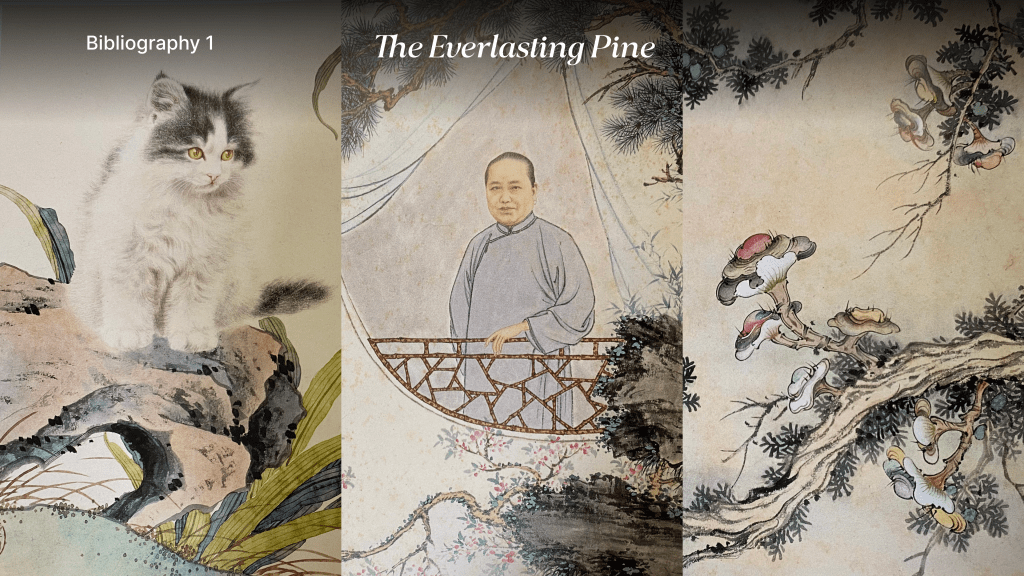
I visited some siblings of my grandpa in the summer of 2019, and the 9th sibling (a brother of my grandpa) introduced me to this amazing album. The picture on the top right corner is a portrait of Lady Xiang, looking plump and amiable. However, her hand is skinny, probably symbolizing she worked hard when she was young. She was wearing a simple traditional costume with little decoration. She is wearing no jewelry; all decorations are “natural” in this painting – rocks, grass, pine tree, plum tree, and a window with medium-level expensive polygon carving decoration. It seems that she shows a subtle smile, but it’s not very obvious, so her overall emotion is hard to tell, and even mysterious.
Even though these four paintings are created by different artists, we can find some similarities within. If we look at the cat, dog, and human figure closely, we may notice that 1) their furs and the face of Lady Xiang were painted very carefully. This technique is called “Gongbi”, which means paint with very thin brushes for high level details. The cat and dog are so well painted that they almost come alive on the canvas, and only those thin brushes can depict such details. However, the tree trunks and rocks are painted roughly, and the brush strokes are powerful. The clothes wore by Lady Xiang didn’t have much details, and this contracts with the face.
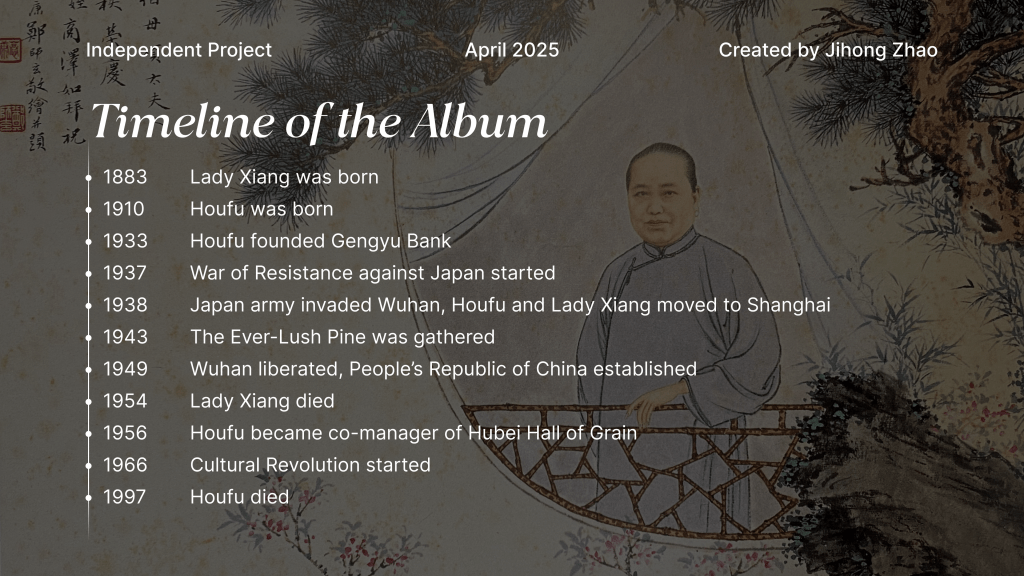
After briefly going through the album and selecting some paintings as references, I researched the history of the period when the album was created. One little brother of my grandfather introduced this album to me in Wuhan and pointed me to more resources about its history, from the internet and by other siblings in the family. The Story of The Everlasting Pine, written by Qianyi Zhao (another brother of my grandfather), explicitly introduced the our family history. My great-grandfather, Houfu, was born in Wuhan in 1910. He lost his father at a young age and lived in poverty with his mother (Lady Xiang) who was only 25 when he was born. She sew clothes and shoes to earn a living for this broken family. She gave the teacher a pair of shoes as a gift every year as tuition her son. Houfu dropped out of school when he was 14 after completing 7 years of education and became an apprentice. After decades of hard work plus some fortune, he became a successful founder and owner of several factories producing food. To show gratitude to his mother, he invited artists from that time and composed an album of paintings and calligraphy as a gift for her 60th birthday. He spent two years gathering these artworks in Shanghai during the wartime. This article set the tone and theme for the project – how fragile people can be facing wars and social changes, but also how tough they can be and fight for a living. I want to present this sense of change and family decline through making a digital sculpture of Lady Xiang, the original owner of the album, and the deteriorating living environment.
Setting the tone and theme is not enough for my project. At this stage, I need more empirical evidence to support the visual aspect of my project. I interviewed my grandfather, who was the oldest sibling in the family with relatively clear memories of the old house and Lady Xiang, about life back in time. He mentioned that after the war was over, the family returned to Wuhan from Shanghai and lived in a house designed by Houfu. However, the building was soon expropriated by the government, and the family moved to an apartment. My grandfather sent me a picture of the old house. I also asked if they owned any furniture, and they told me they used to have a set of rosewood tables and chairs, and our family (my grandfather) still had one left. This information is a good reference for the supportive visual elements in the project, aside from the subject. I can build the environment based on the old building, and enrich it with furniture.
Process
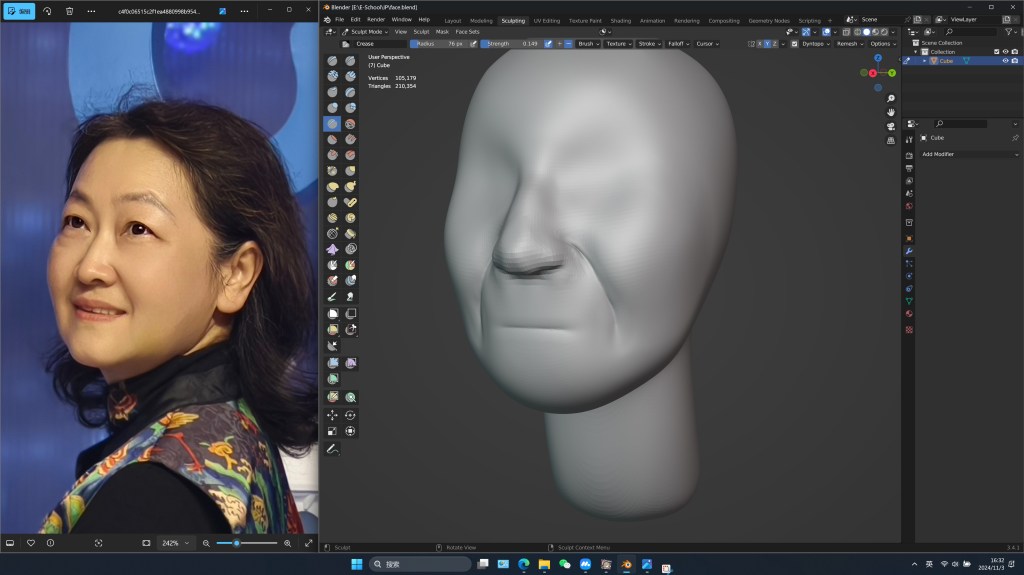
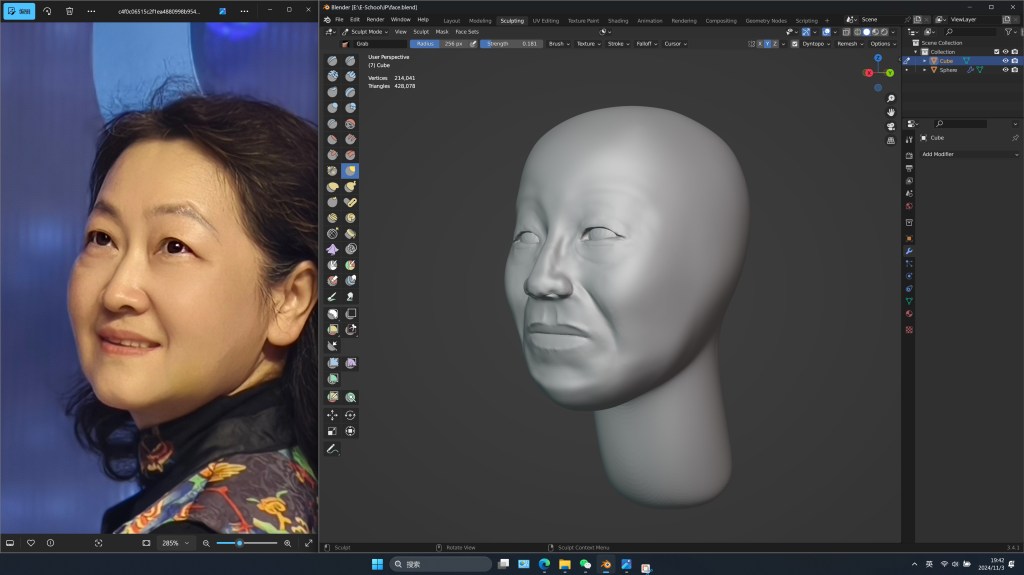
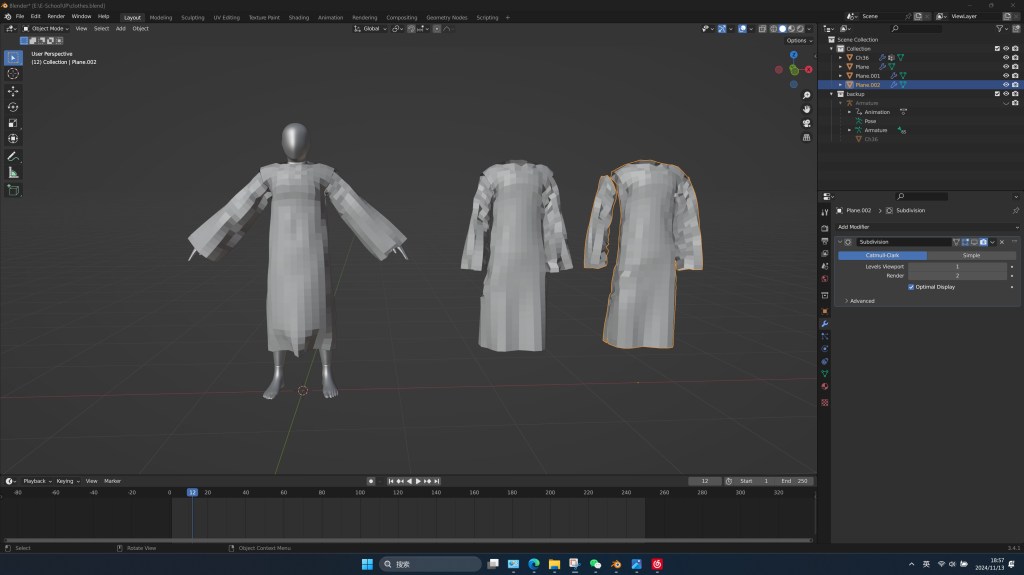
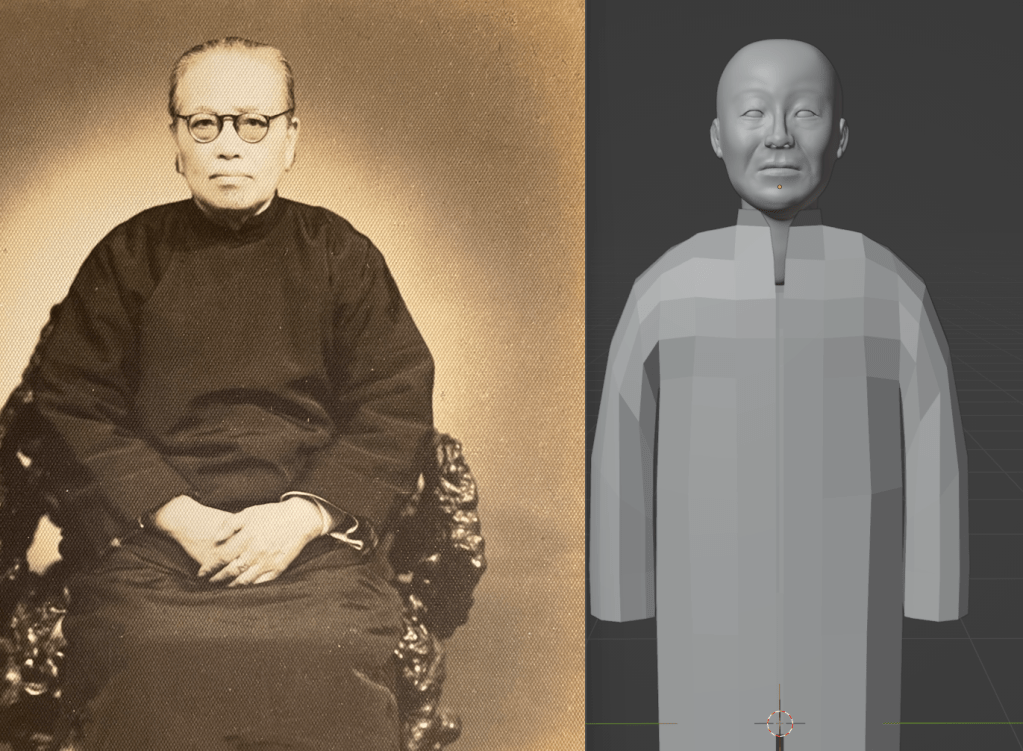
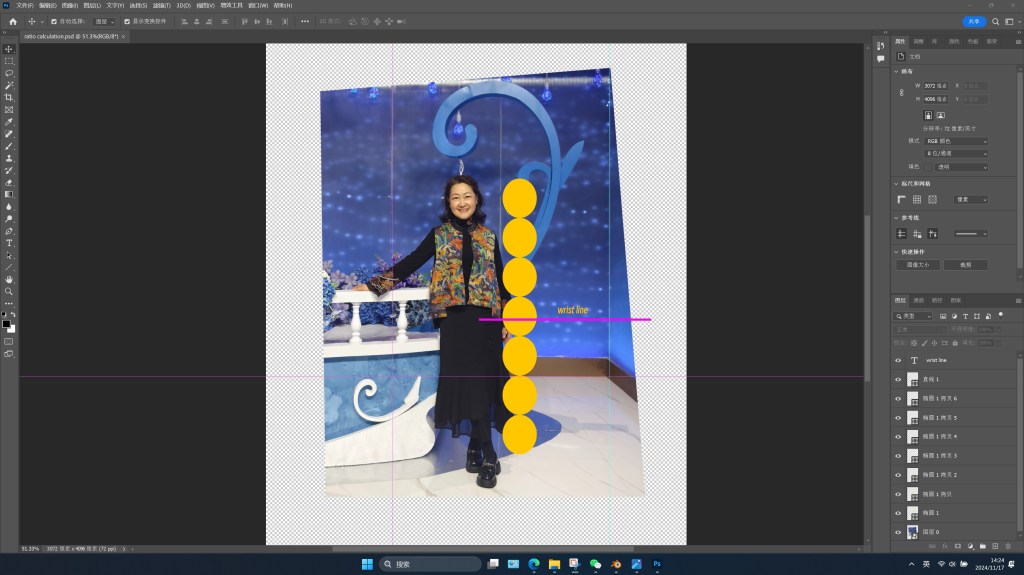
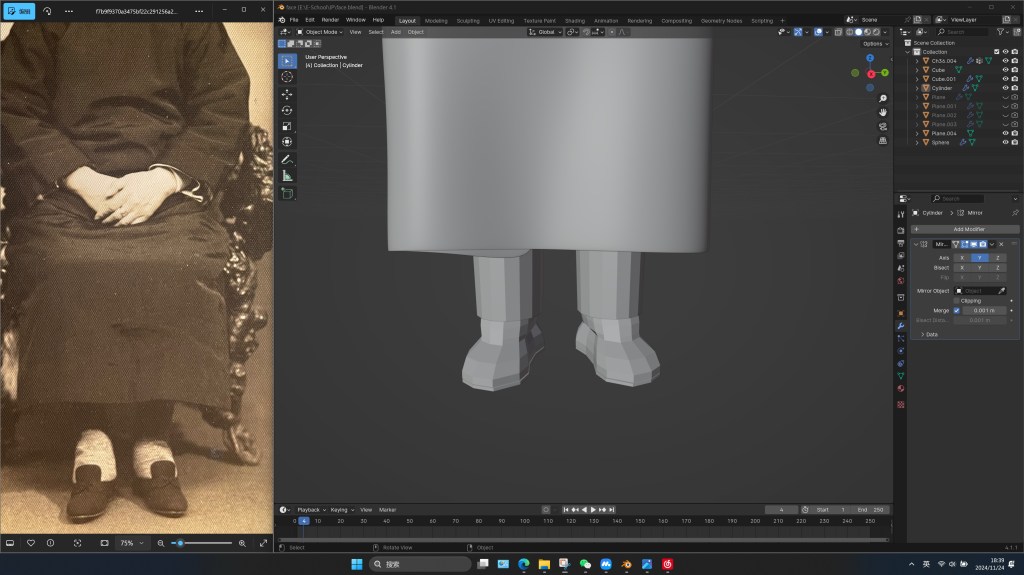
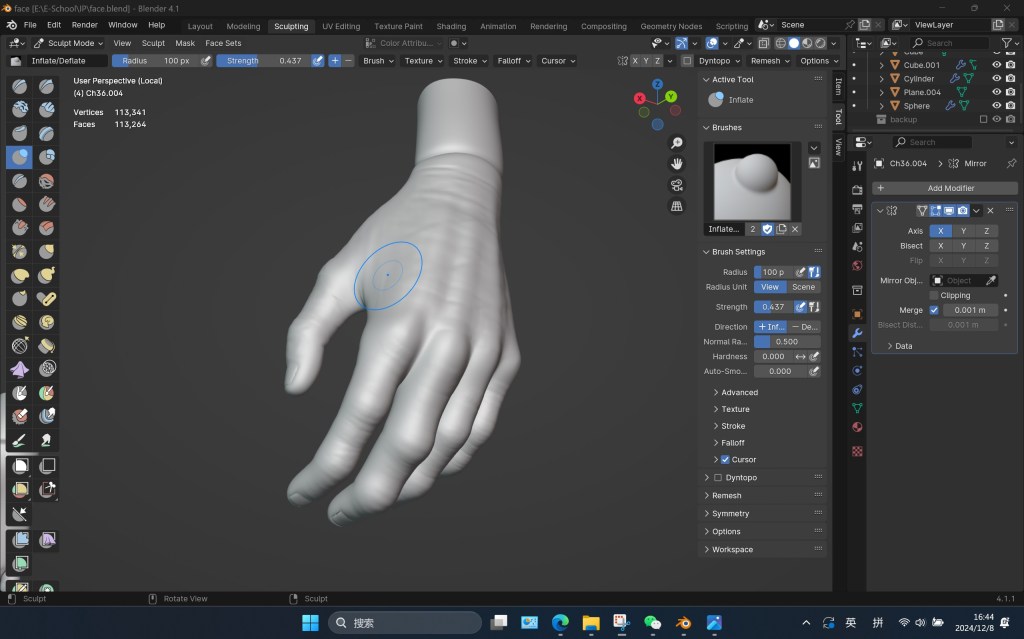
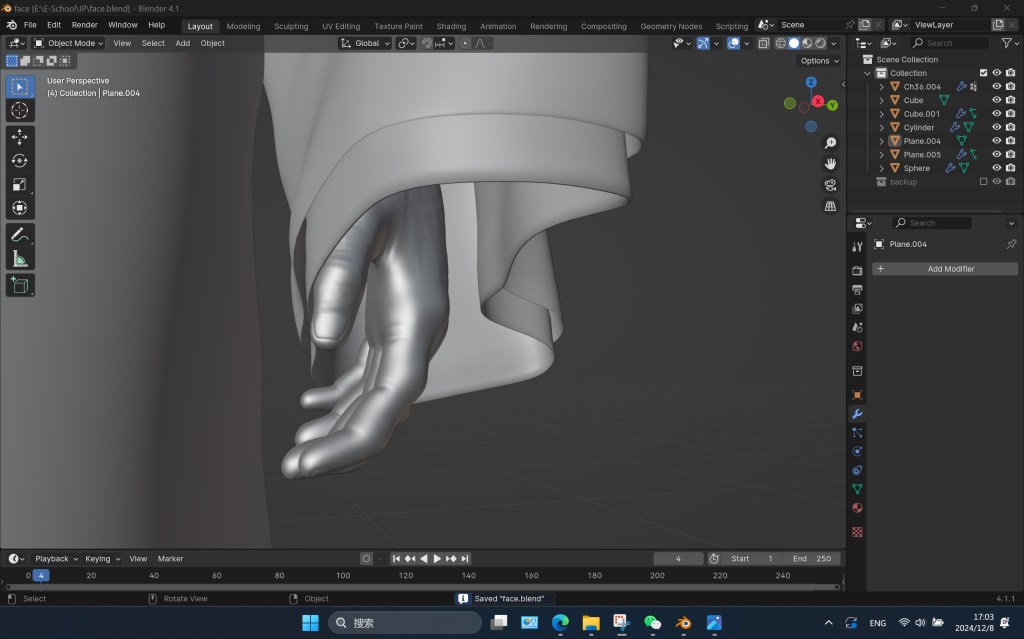
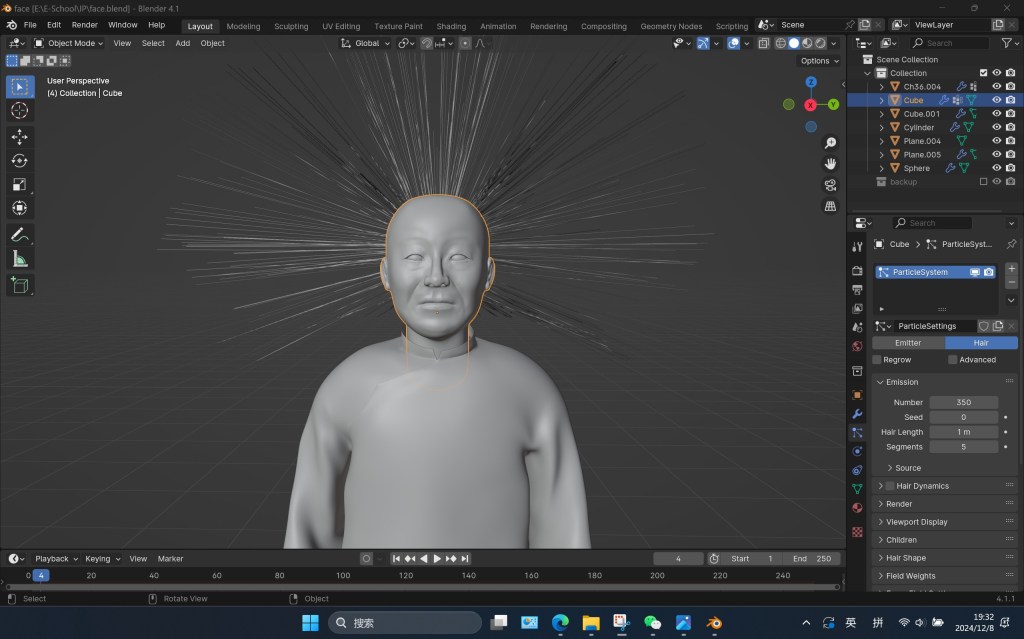
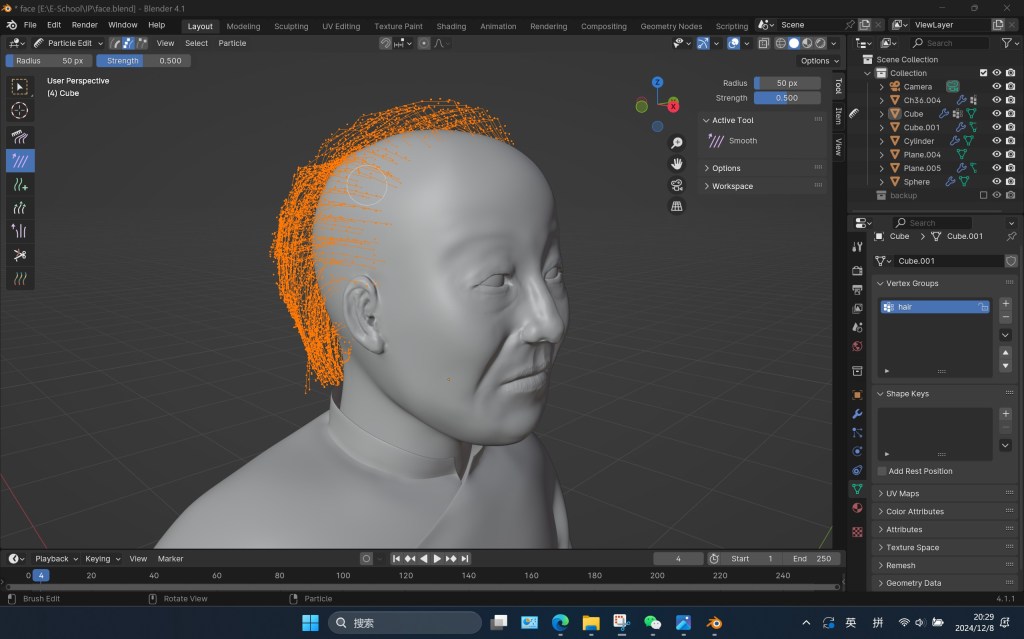
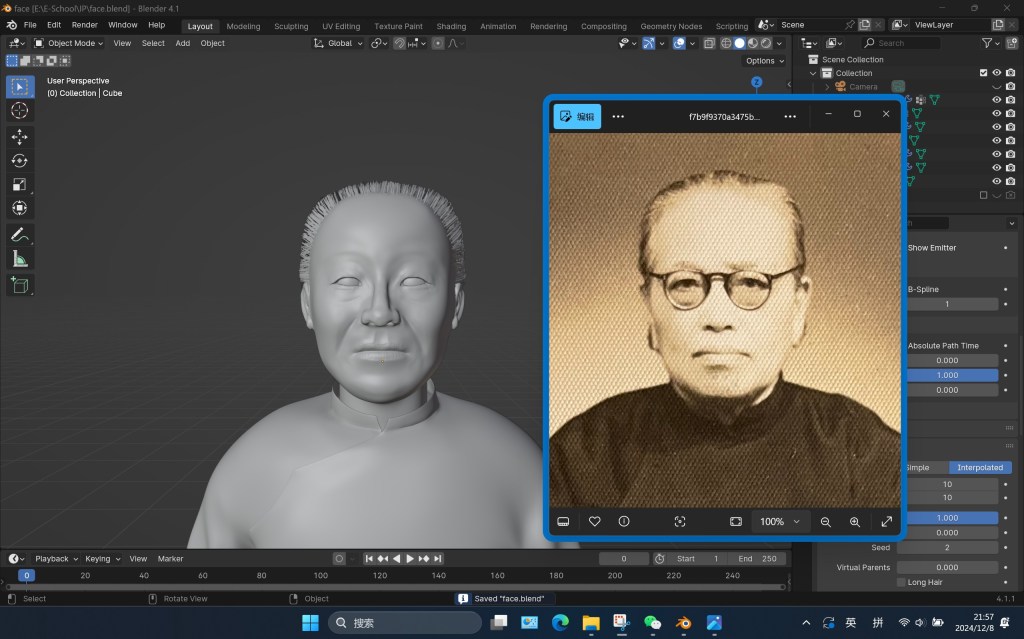
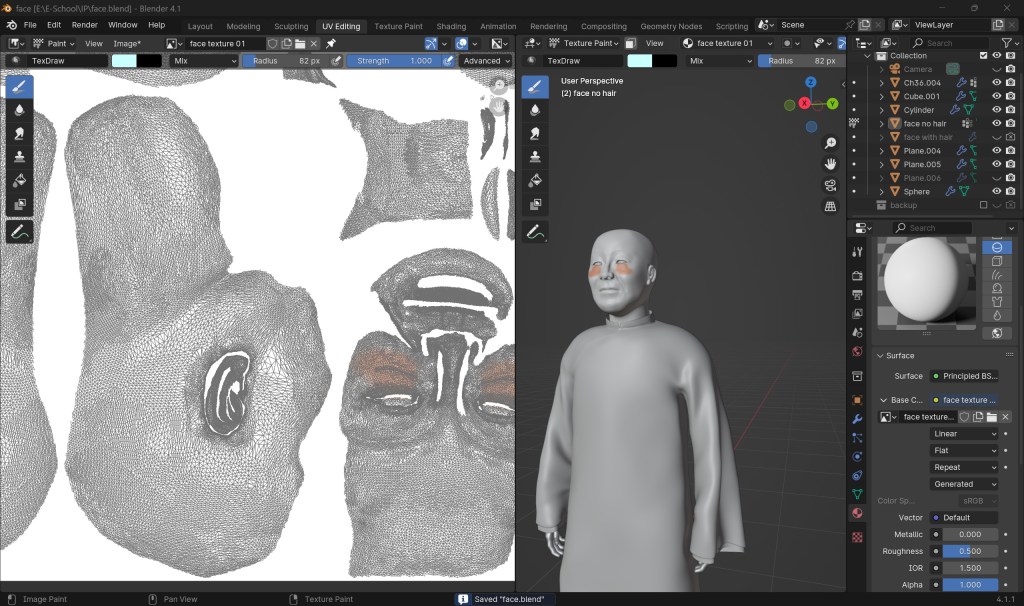
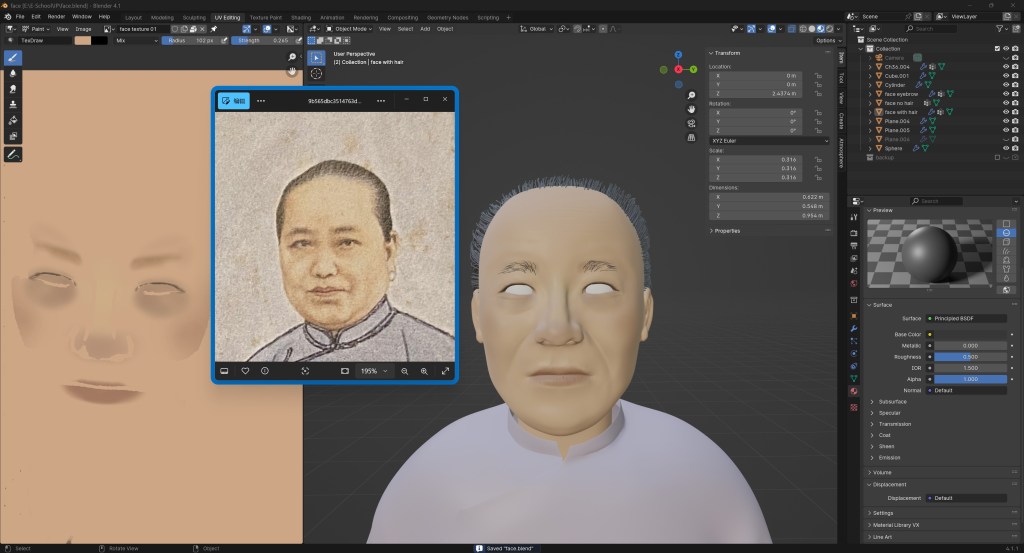
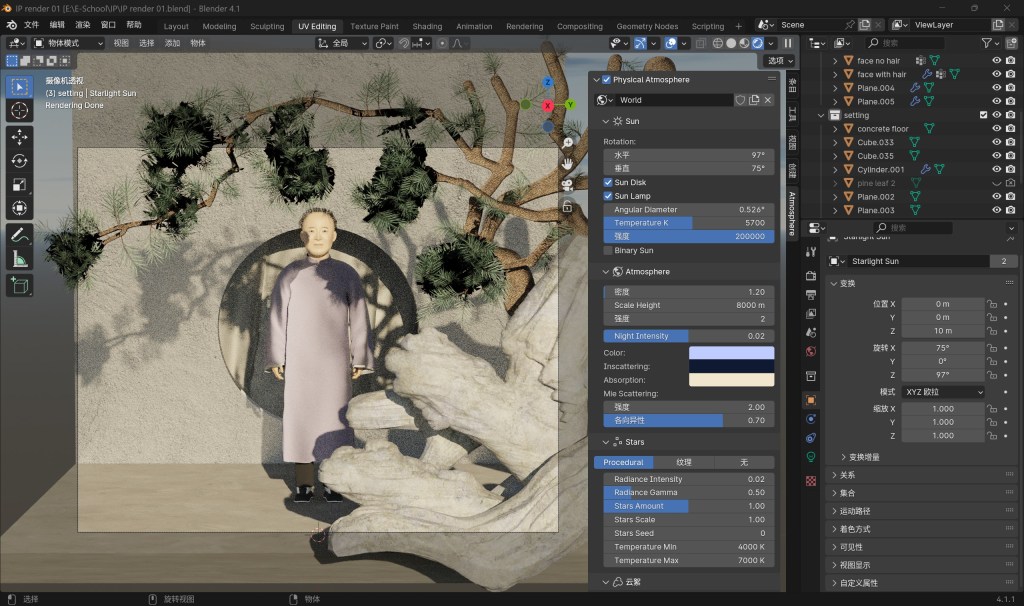
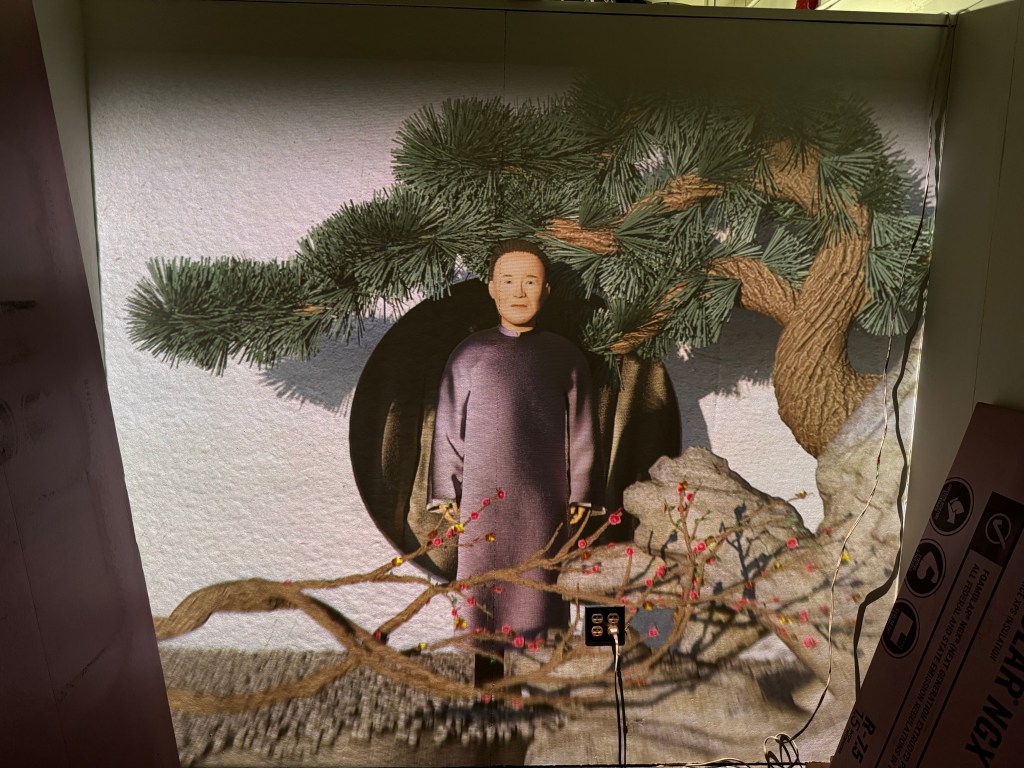
I sculpted the face of Lady Xiang in Blender in sculpture mode by referring to her old photos and clear pictures of her direct descendants. I built the robe with the physical simulation system in Blender, and then manually adjusted the details. I wanted her body to be approximately the same size as a real human in the projection, so the viewing experience could be engaging and immersive. She is dressed with elegance and carries herself with grace, yet the slight stoop in her back quietly reveals the traces of years of labor and the passage of time. Her gaze should be calm and gentle, as if she were looking at the viewer—and at the same time, beyond them, toward a sunset outside the frame. It is like a single moment from her ordinary yet remarkable life: she stands before the courtyard wall, casting an unintentional glance toward the world beyond it. I slightly raised the angle of her head and eyes to achieve this.
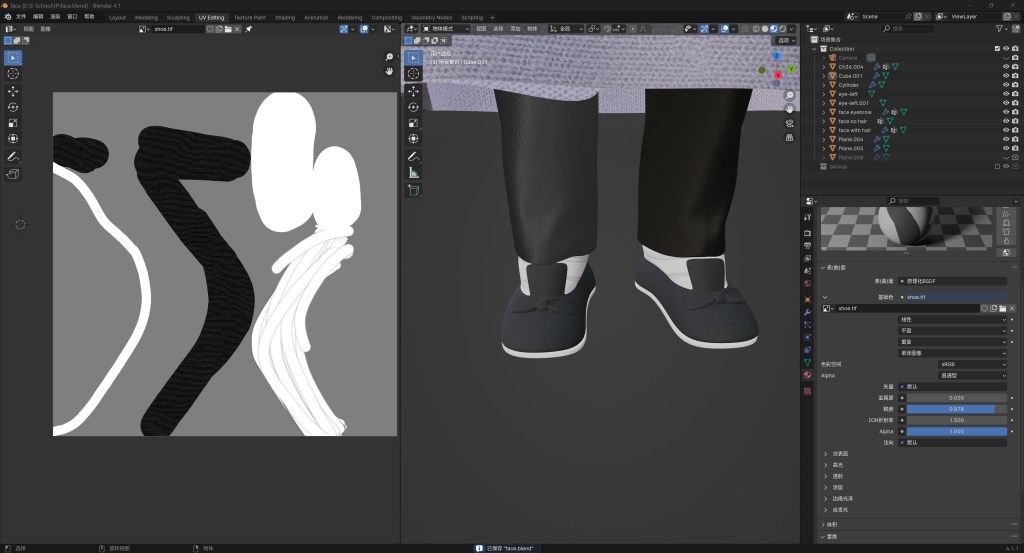
To proper preserve the color information of the model for painting, I unwrap the UV map of her head and robe in Blender. I painted certain areas of her head with warm, saturated colors, like the nose tip, cheeks, and lip. I chose a rough, simple pattern for her robe, just like how she was portraited in the photos and album.
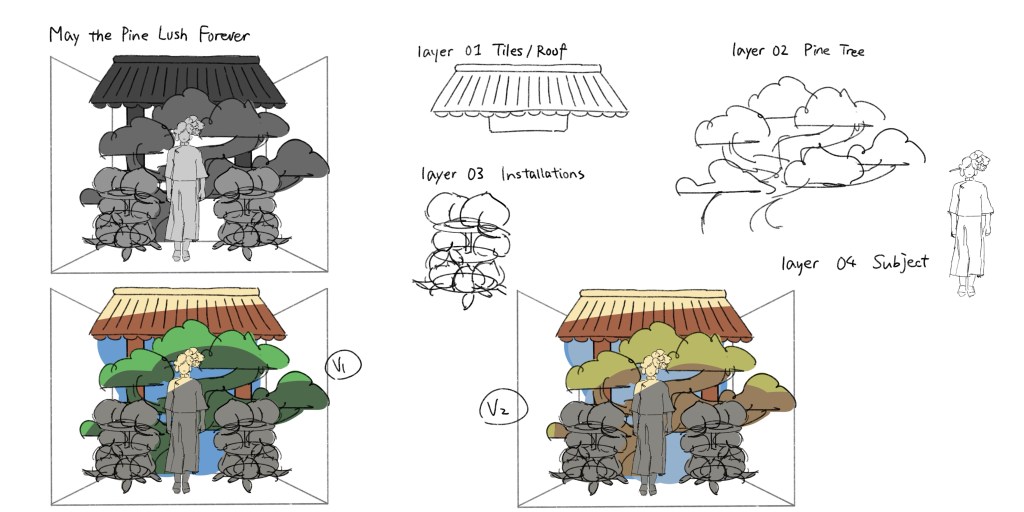
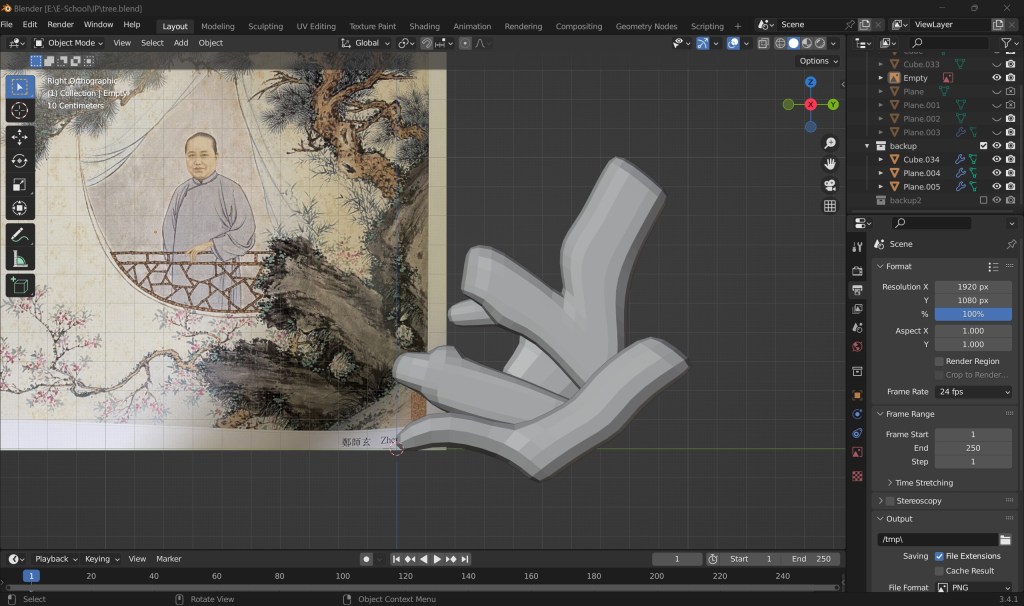
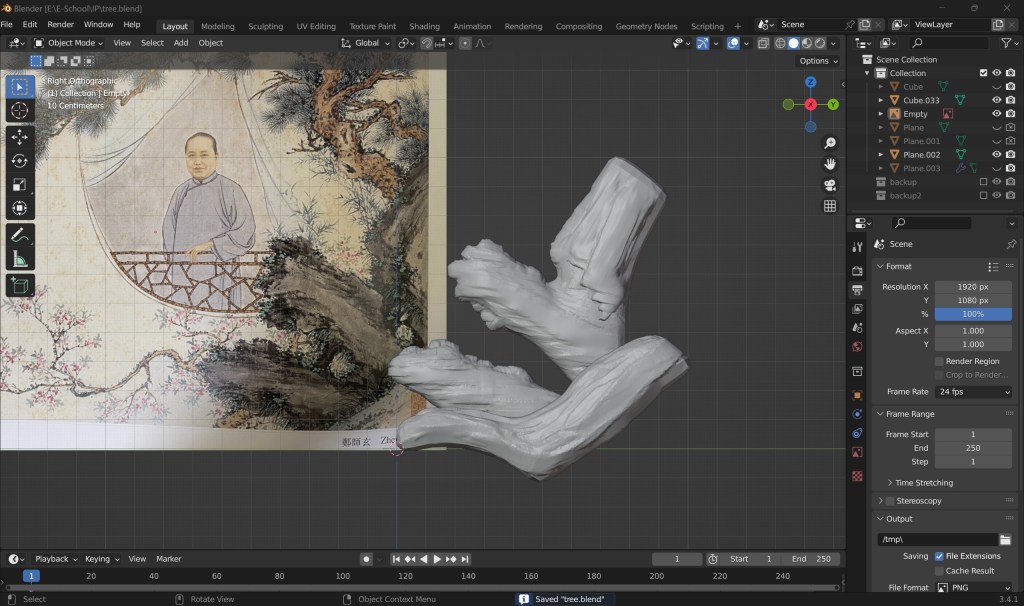
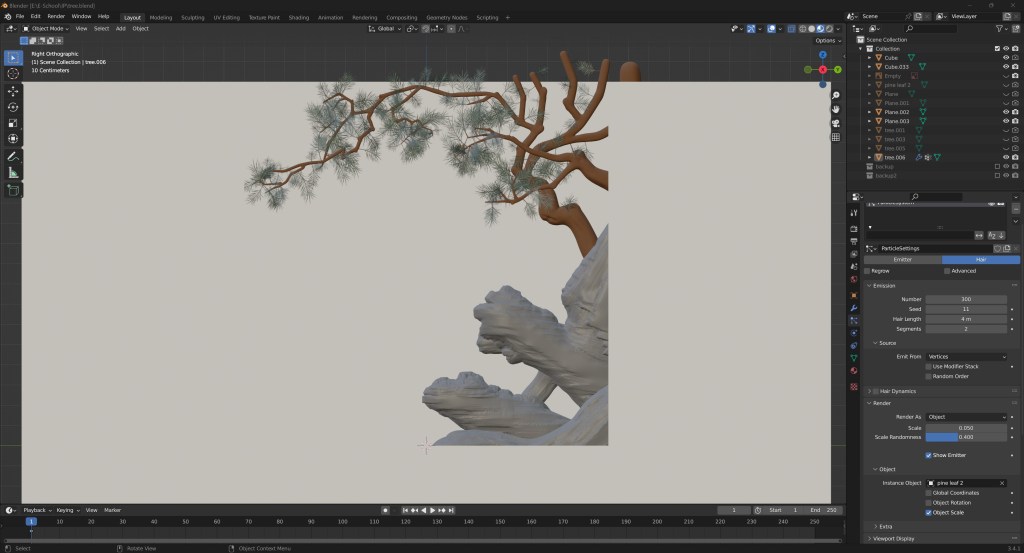
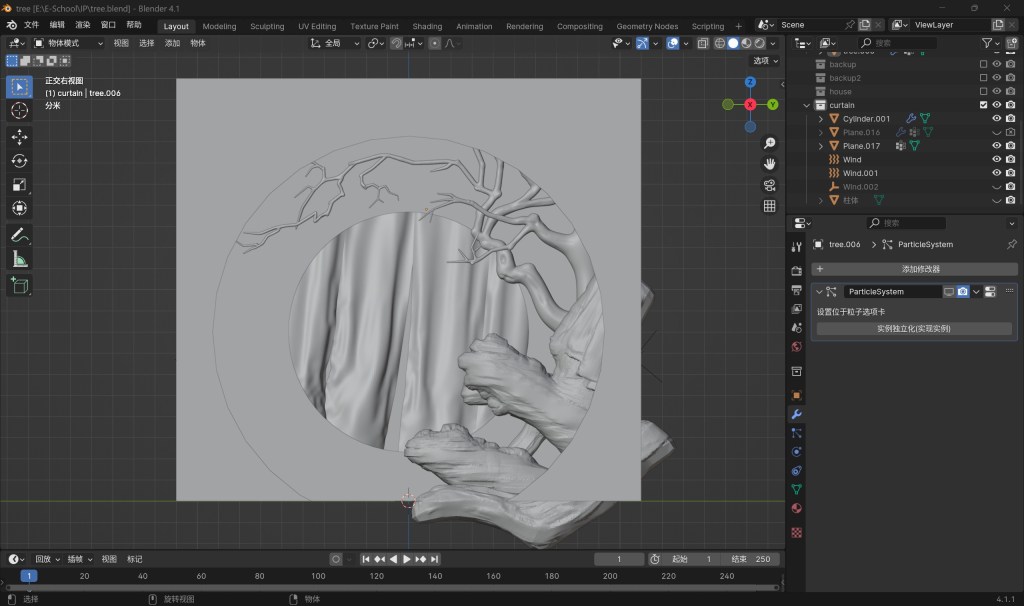
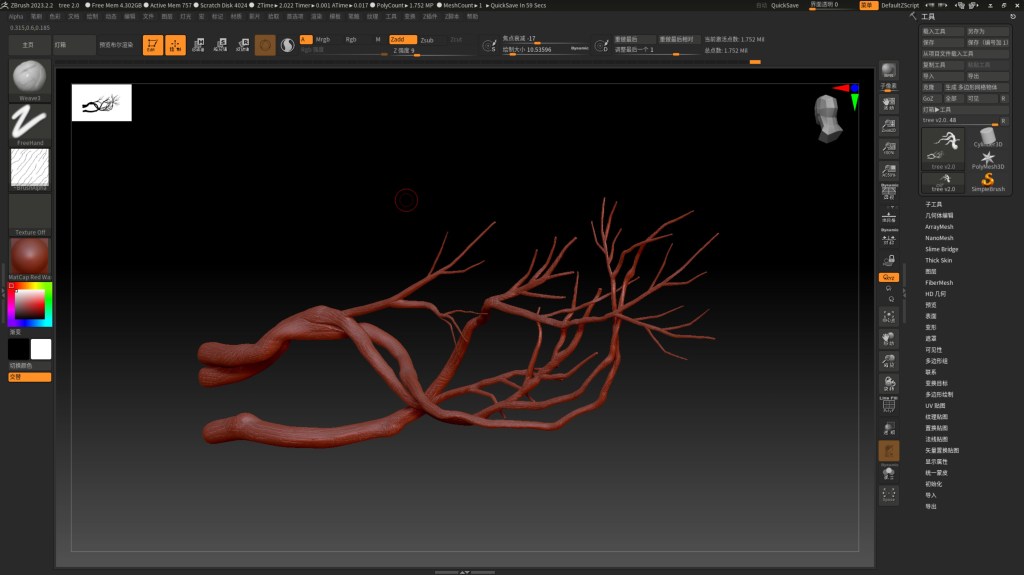
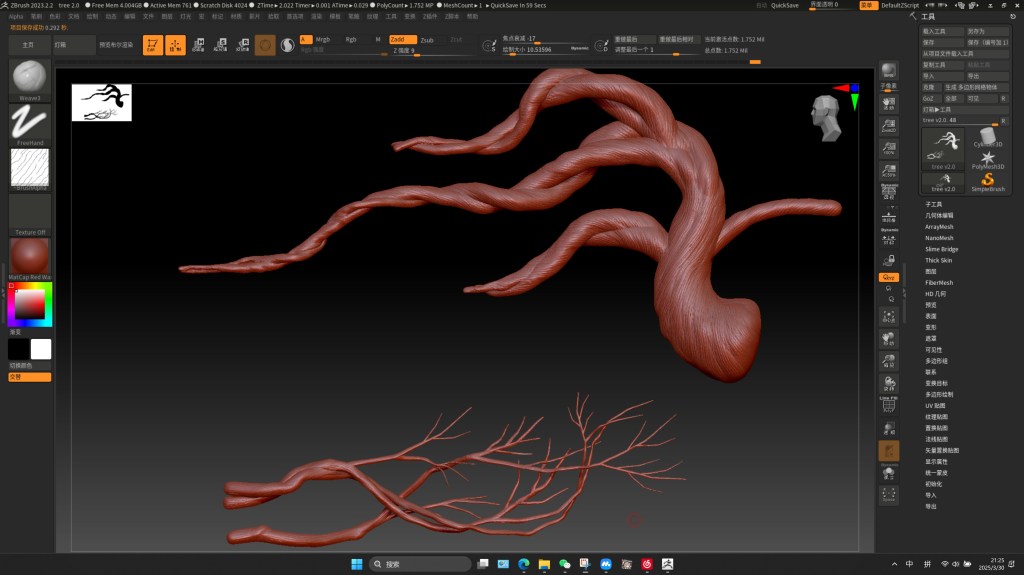
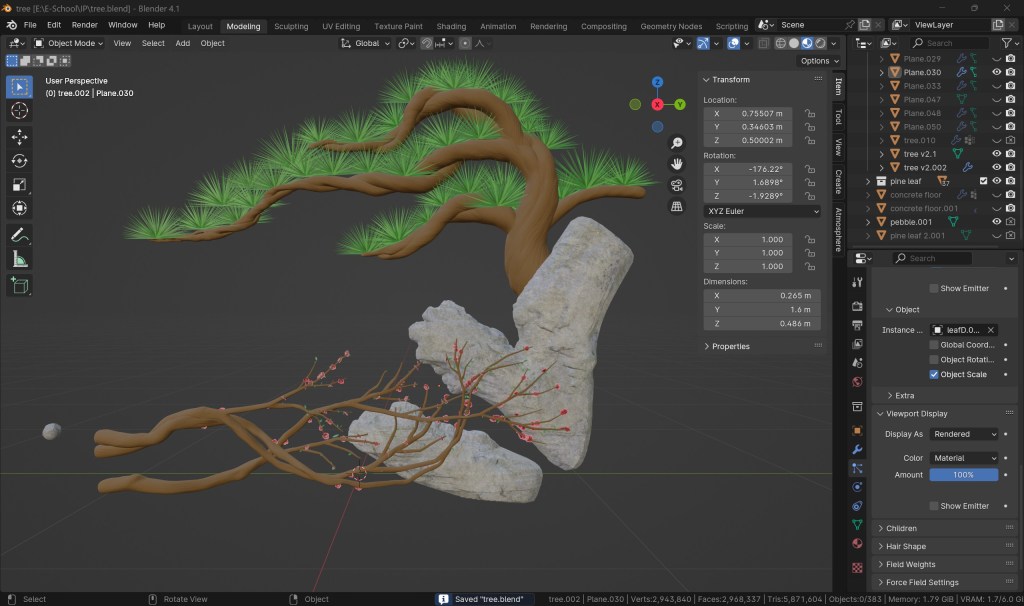
I referred to the album for the background as well. Pine tree is the most important object in the album, symbolizing longevity and toughness. At the same time, the album features plum—symbols of good fortune, happiness, and joy. In the final iteration, I arranged the pine tree at the top right corner and plum at the bottom left corner. In the composition, the central figure, the circular window frame behind her, and the surrounding pine and plum branches radiate outward in layers, establishing both visual stability and a sense of progression.
In the prior iterations, I used golden threads to represent “fortune”. As I upgraded the performance of the pine tree, I used golden plums to symbolize “fortune”, and as the sun sets, the golden plum gradually fall.
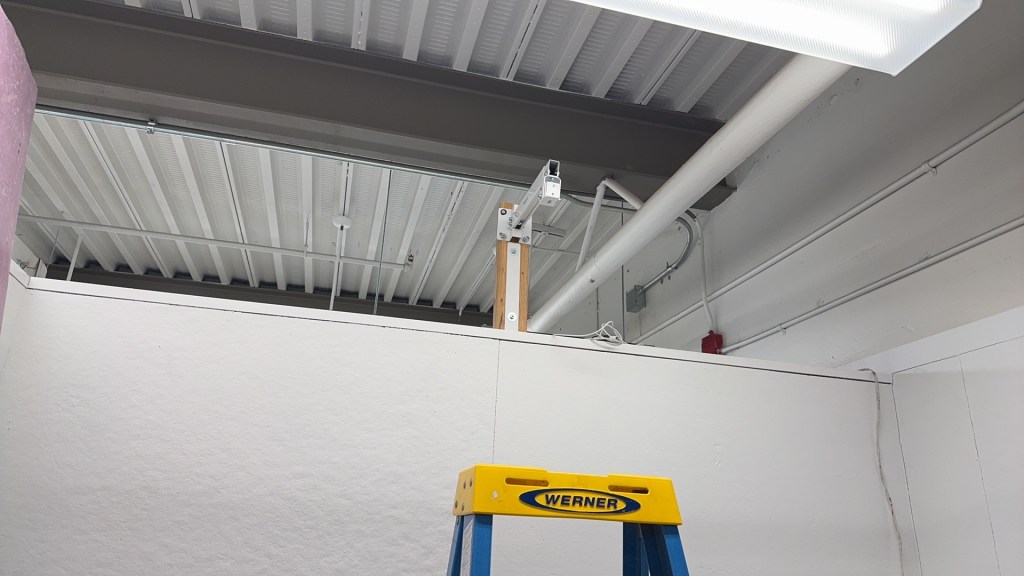
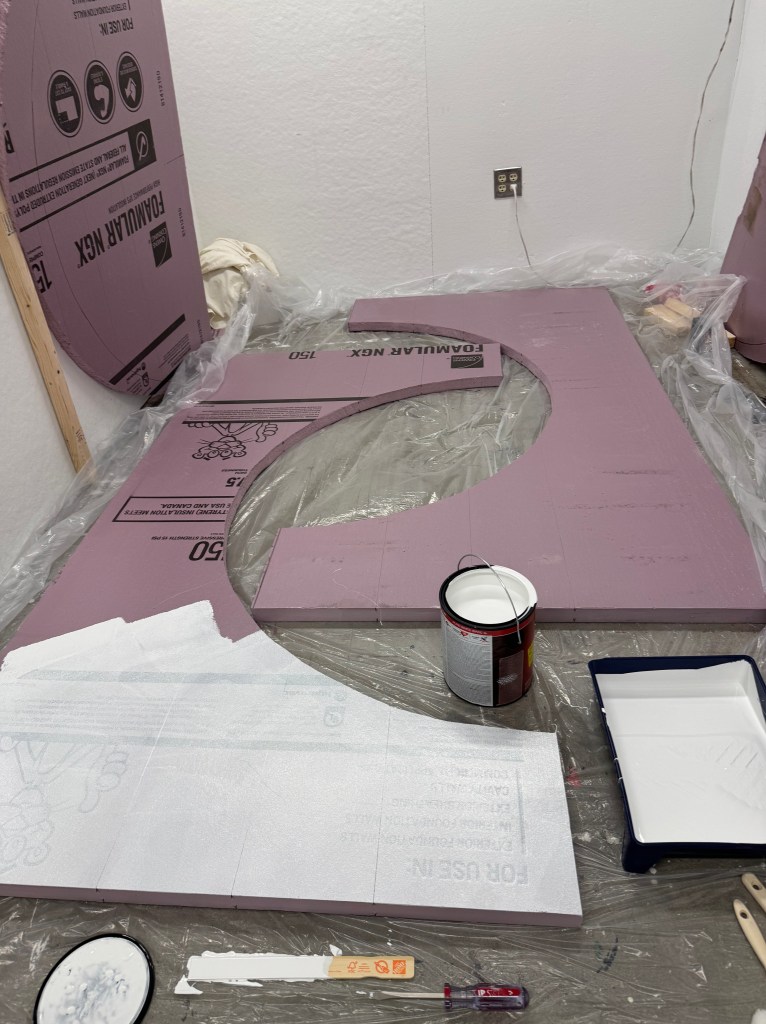
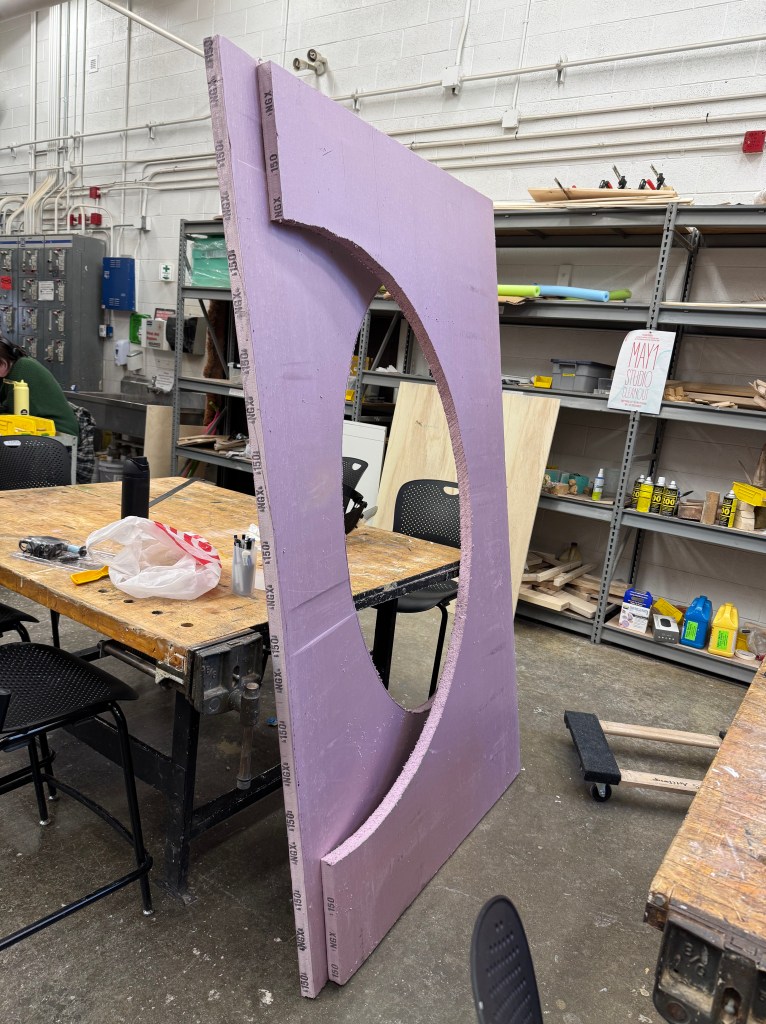
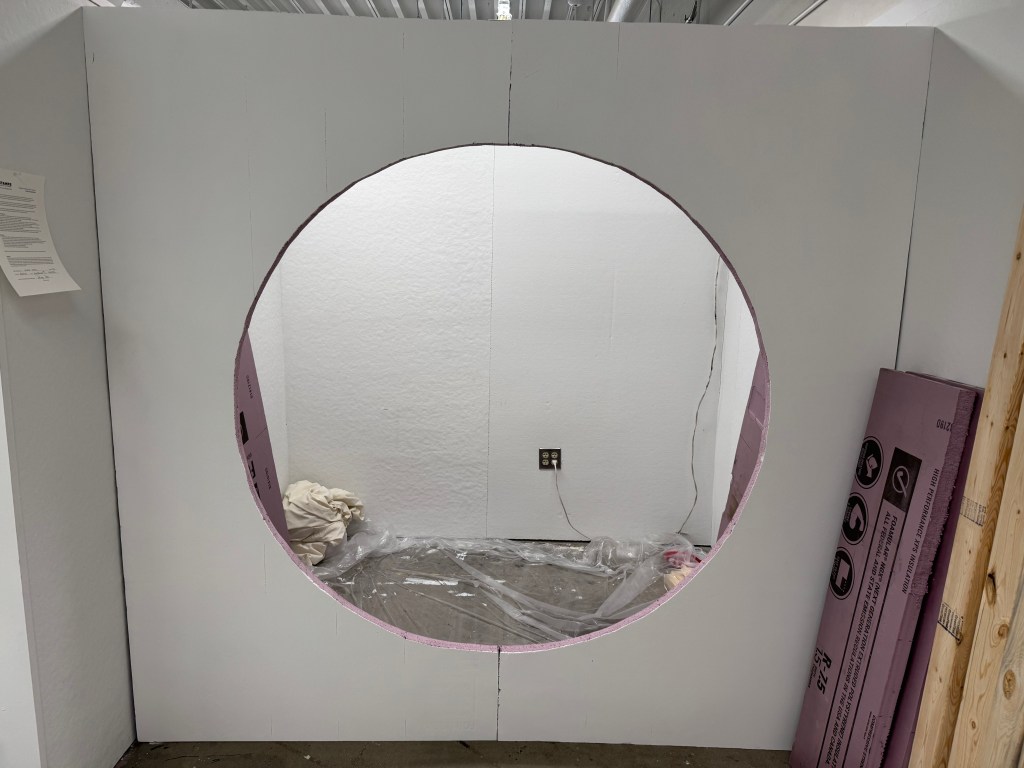
I applied a concrete texture to the floor, so it blends into the floor of the exhibition space, breaking the fourth wall and making the experience more engaging. The big circular window on the temporary wall responds to the smaller window in the projection. I also made a mini stone decor with remained foam to cover the power outlet on the wall.

Reflection
I gained a deeper understanding of contextual, conceptual art and modeling skills during this project. I went over a structured yet flexible research process. Secondary research includes looking through the album, reading articles that my family members wrote about the album, and gathering artistic precedents; primary research includes interviews with my family members and actively learning about the history of the family and the album. After this thorough investigation, I understand more about what I really want to express in this project and what visual styles I could use to convey this idea. This research process also applies to other fields of study I have been working on, like product design.
The modeling skill I developed from this project will also better prepare me for future artistic explorations. I was more comfortable with building industrial design and commercial visualizations with Blender and KeyShot before IP, which involves inorganic modeling and topology skills. Now, I have learned more about unwrapping UV maps, coloring the models, sculpting mode in Blender and ZBrush, customizing materials in Substance Painter, baking normal maps, and rendering the scene in physical environments in Blender. The skill sets I used for IP are extensions from my second-year studio – I used physical rendering and built trees as well.
In the second half of the second semester, I took a VR class in Taubman College. I thought I could use my modeling skills developed in IP in that class, but it turns out that some rendering and texturing skills I gained in the VR class also helped my IP. For this reason, my rendering iterated drastically in the second half of the semester. I believe this is a good thing – even though the constant learning process made the quality of my project slightly inconsistent, I always look forward to using these skills for my next project.
At the time point where I was writing this reflection, I had already decided to continue learning product development in Philadelphia, and conceptual design and character modeling would remain a “hobby”. However, I do not deny the possible future of making more projects like this – creating artistic scenes or even worlds, aiding the storytelling aspect of my product design, or even just for fun.
 JIHONG ZHAO