
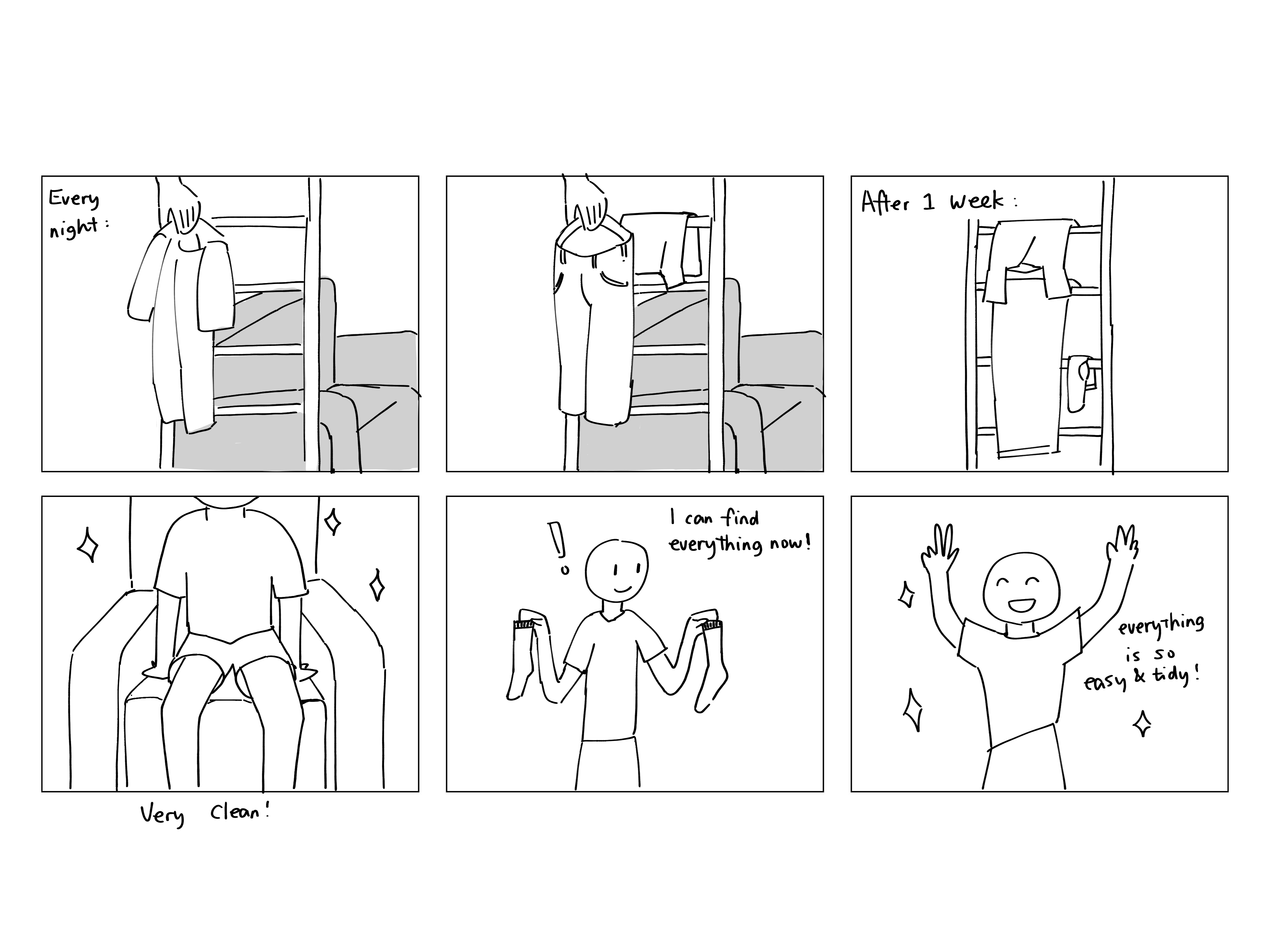
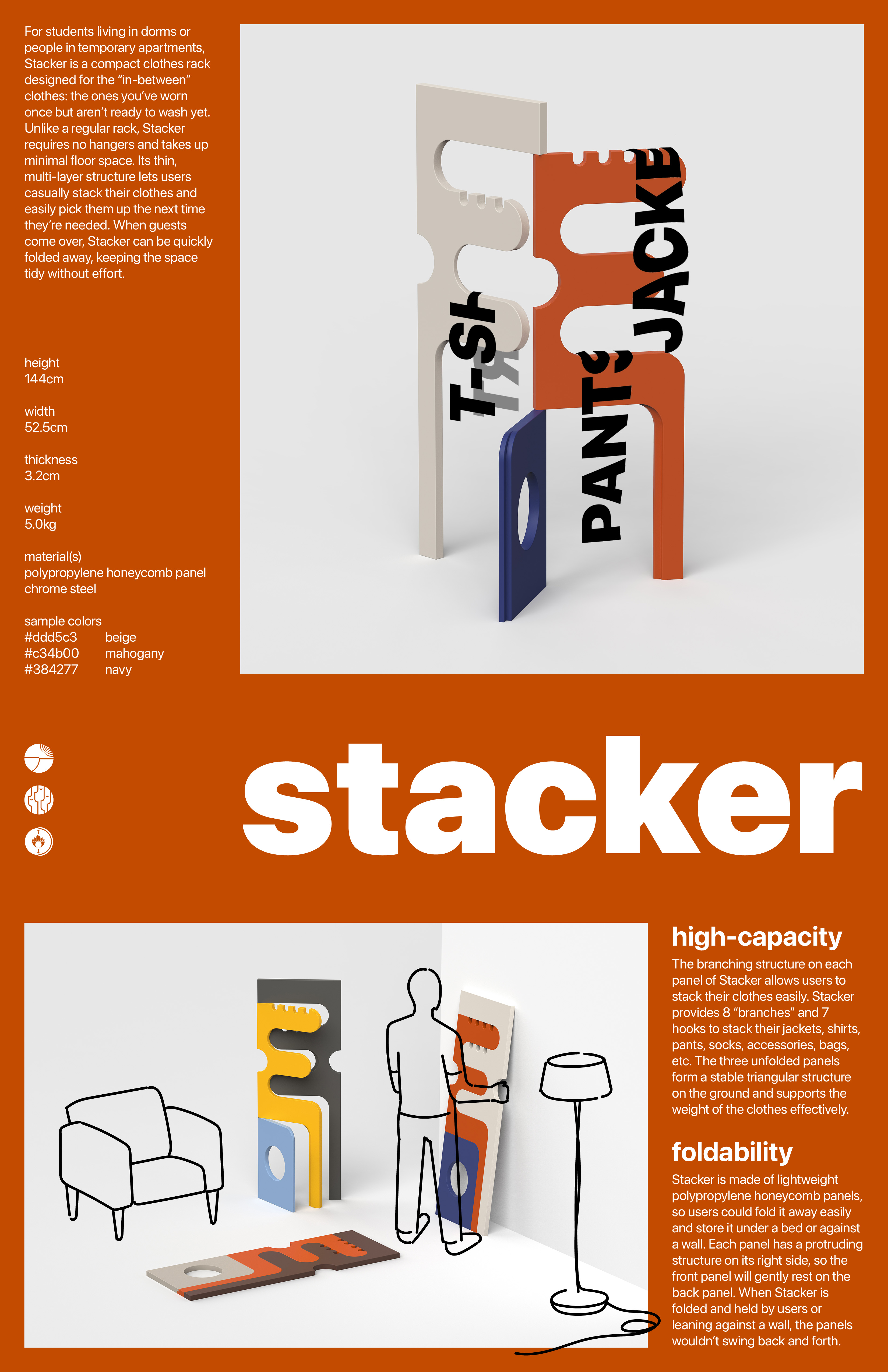
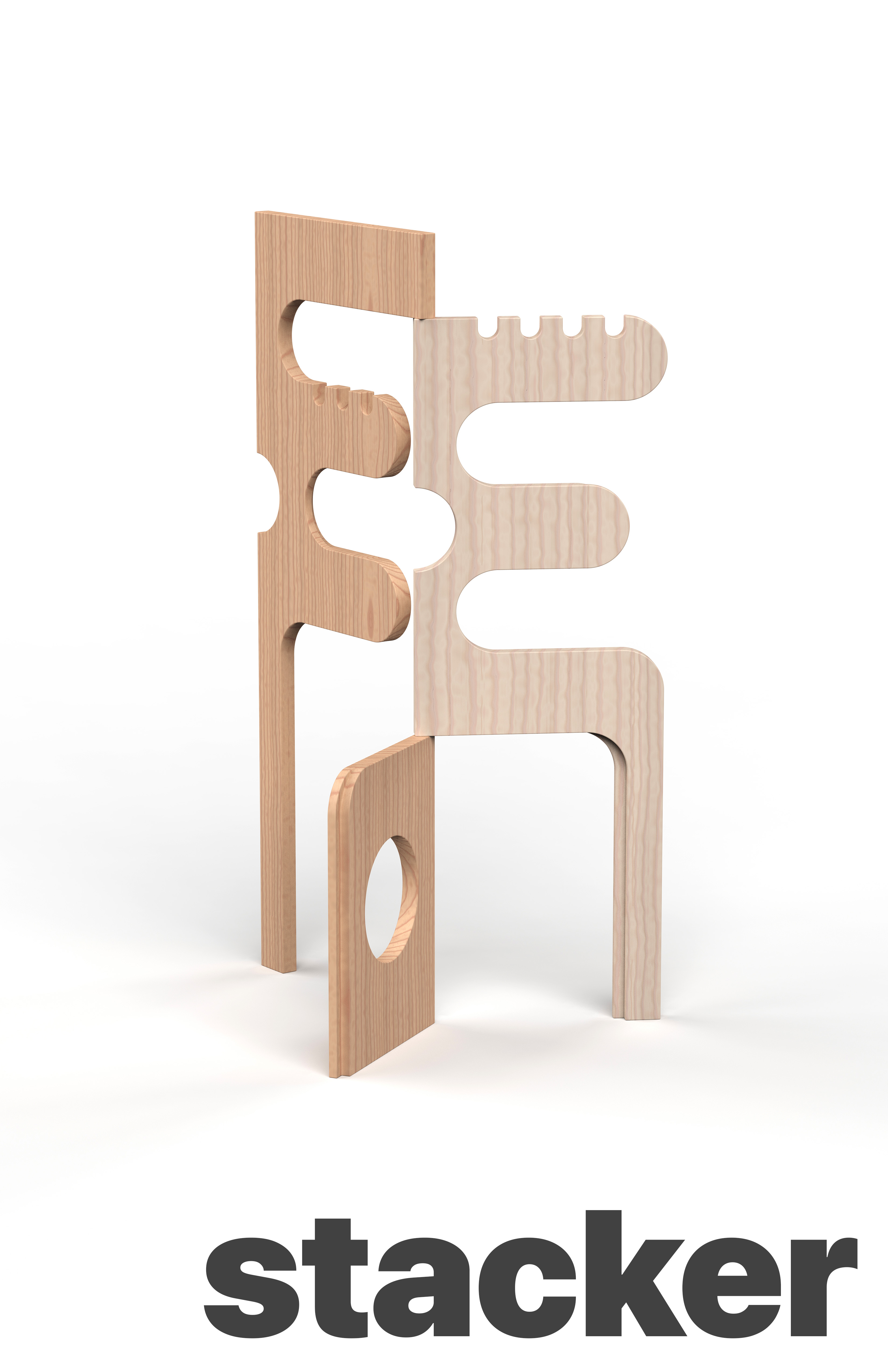
For students living in dorms or people in temporary apartments, stacker is a compact clothes rack designed for the “in-between” clothes: the ones you’ve worn once but aren’t ready to wash yet. Unlike a regular rack, Stacker requires no hangers and takes up minimal floor space. Its thin, multi-layer structure lets users casually stack their clothes and easily pick them up the next time they’re needed. When guests come over, Stacker can be quickly folded away, keeping the space tidy without effort.
Problem Statement
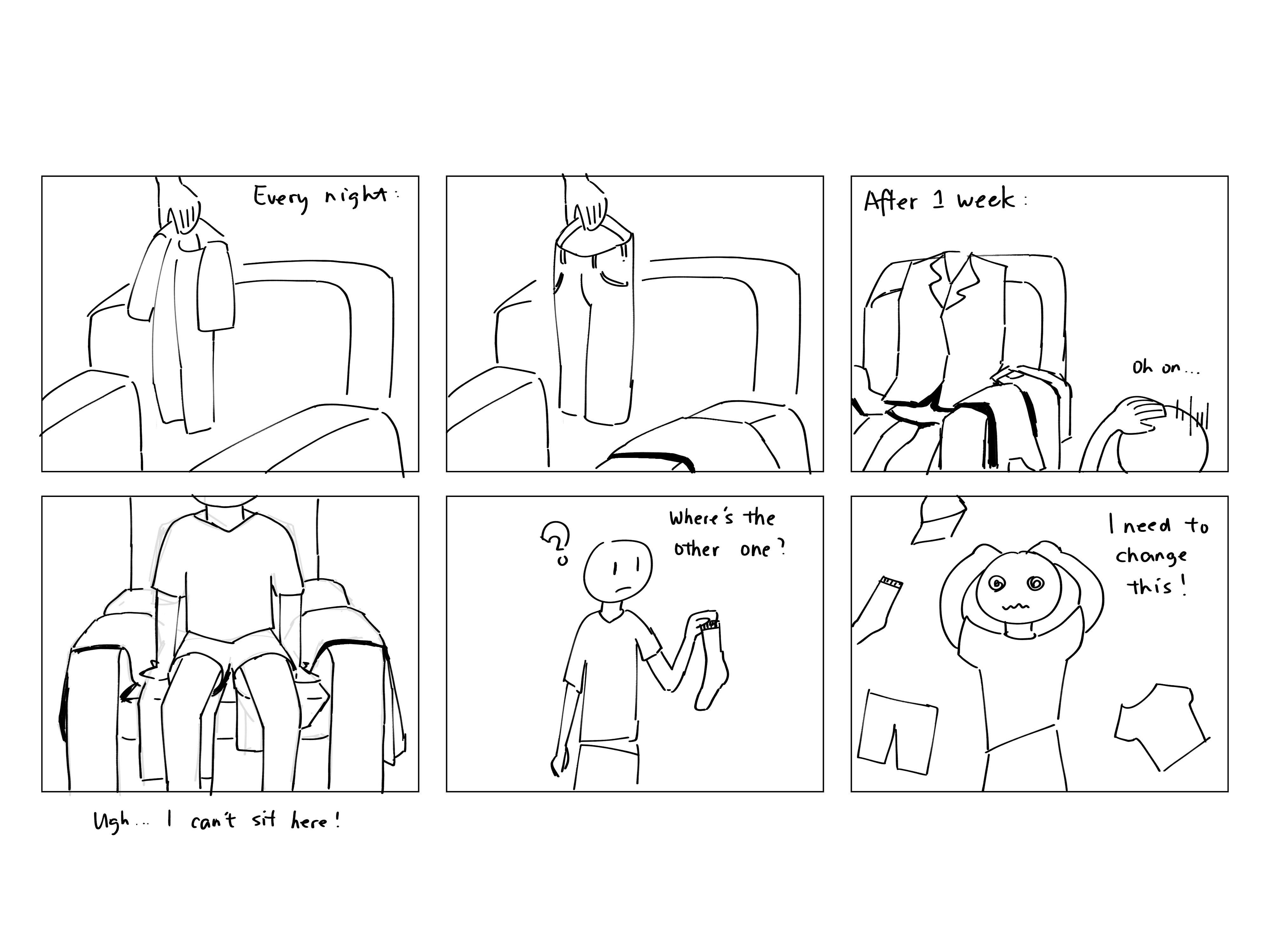
According to my observations and interviews, a lot of students living in dorms or single apartments lack the motivation to fold or hang clothes all the time. For those clothes they only wear once that are not yet to be washed or put back into the closet with the clean clothes, these students tend to throw them on a chair. These clothes will stack on each other, and the chair will become unable to sit on the few days before laundry. To solve this problem, I want to develop an affordable, space-saving, easy to use clothes organizer.

Sketches
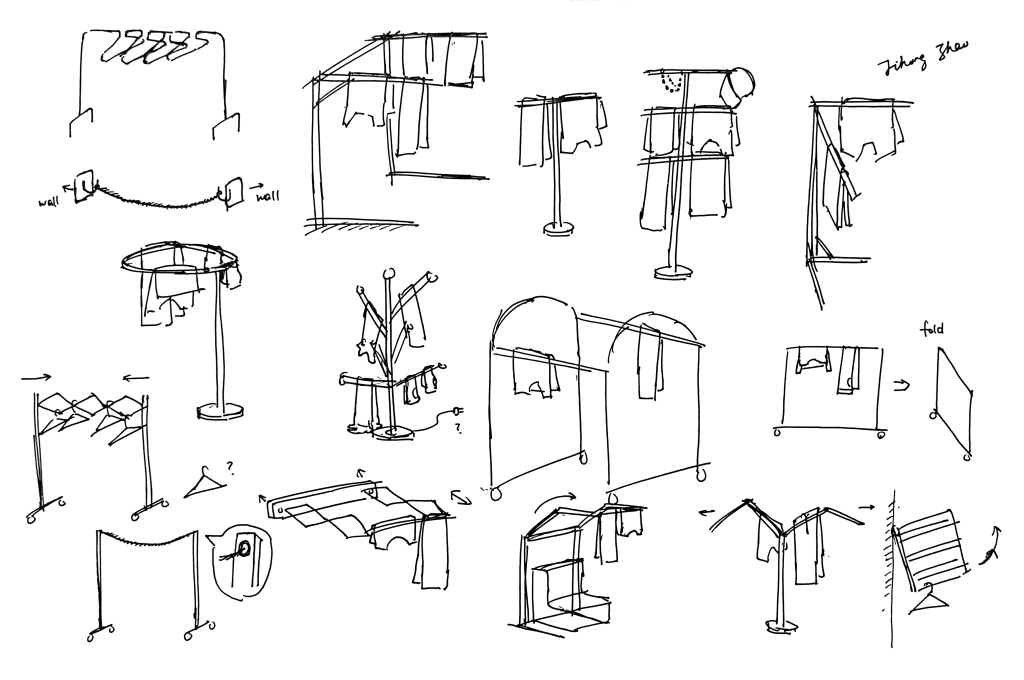
Based on the mood board and market research, I sketched several clothes organizing solutions that I thought could be easy for my target users to use.
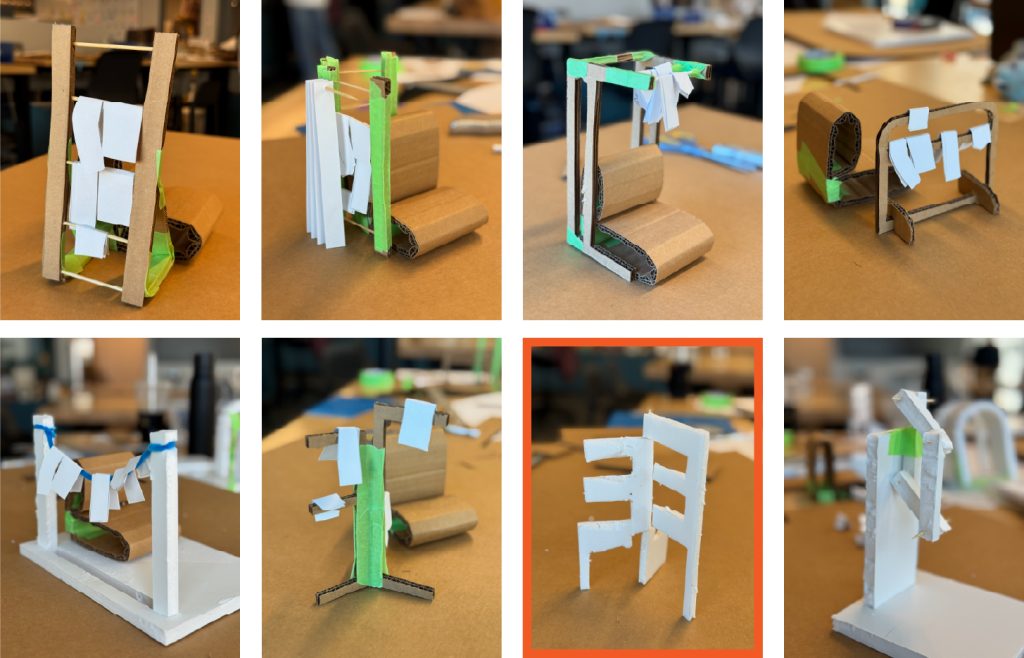
I kept iterating in the physical workspace. I made several sketch models, some from the 2D sketches and some were newly generated during the making process. Finally, I narrowed down to the door-shape solution and decided to move on with it.
Concept Testing
The idea of this concept is cutting a panel into three parts that rotate along an axis, like a door. The panel is cut in a zigzag way, so it forms several “arms” to hold clothes. When opened, the space between each arm is 15cm, which is high enough for users to easily hang or even “throw” their clothes over. It can stay fully closed for storage, half-way open to hold some clothes, and fully open to hold more clothes and accessories. The three-feet structure ensure the stability. There are hooks on the arms to hang bags, hats, or scarves.
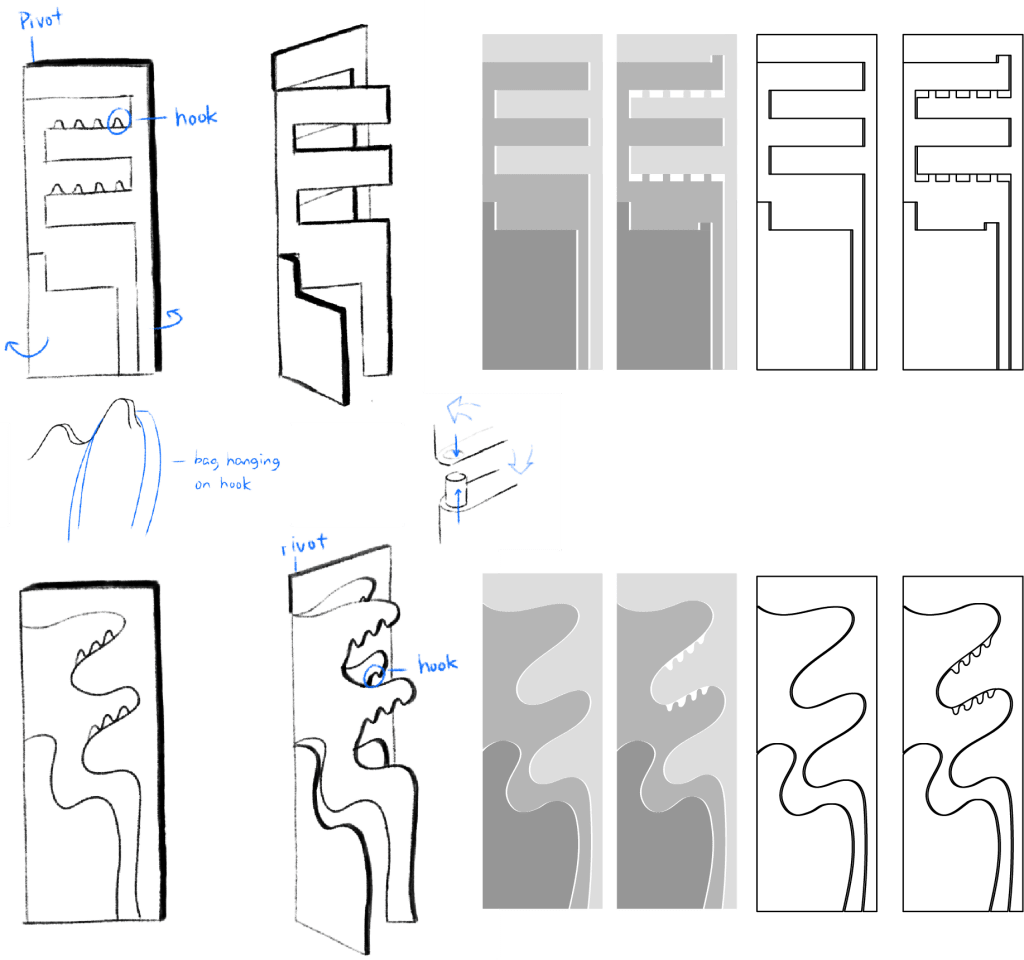
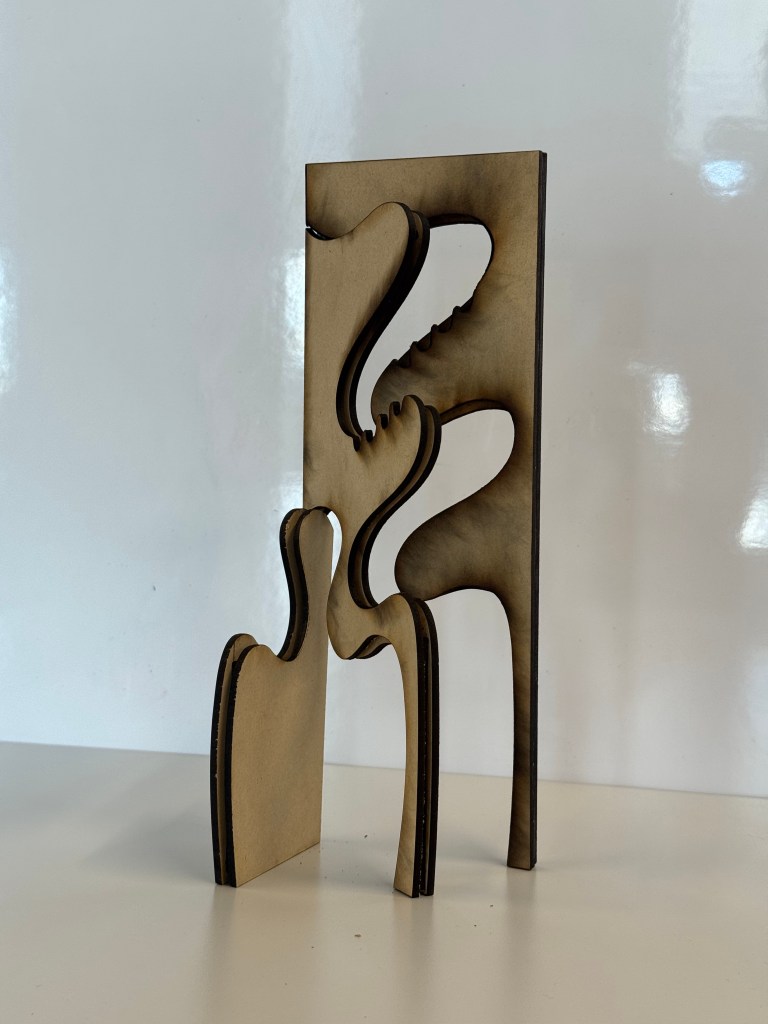
I sketched two versions, one with straight lines and one with curvy lines. I laser-cut two 6-inch models to test the opening and standing mechanism.
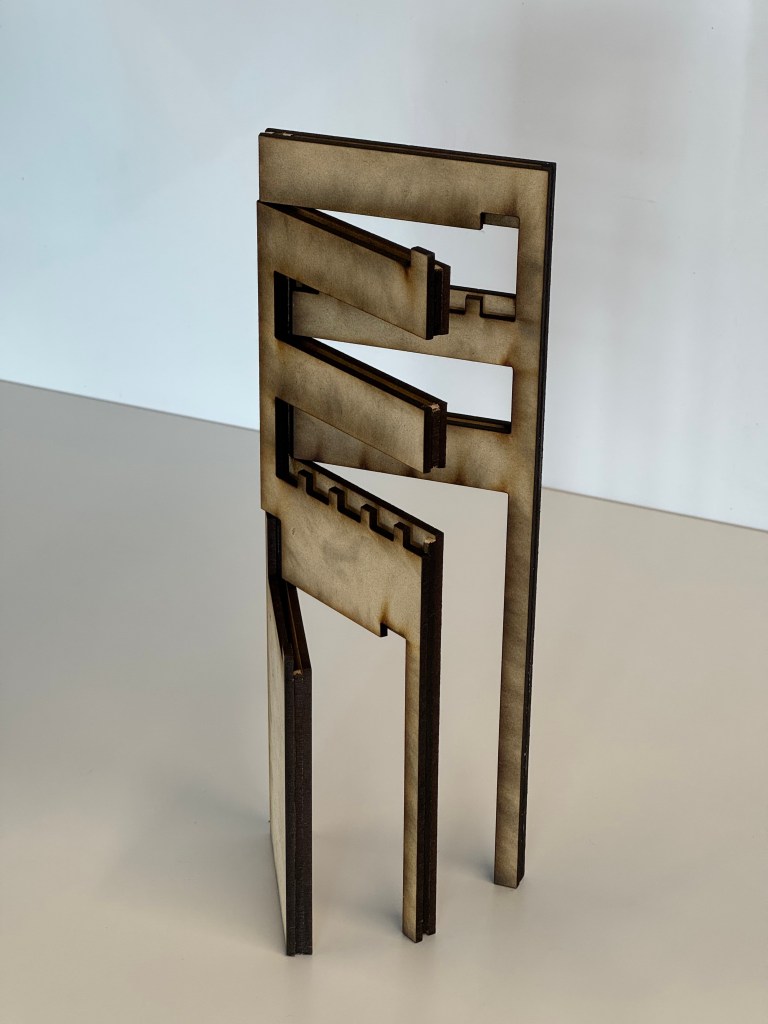
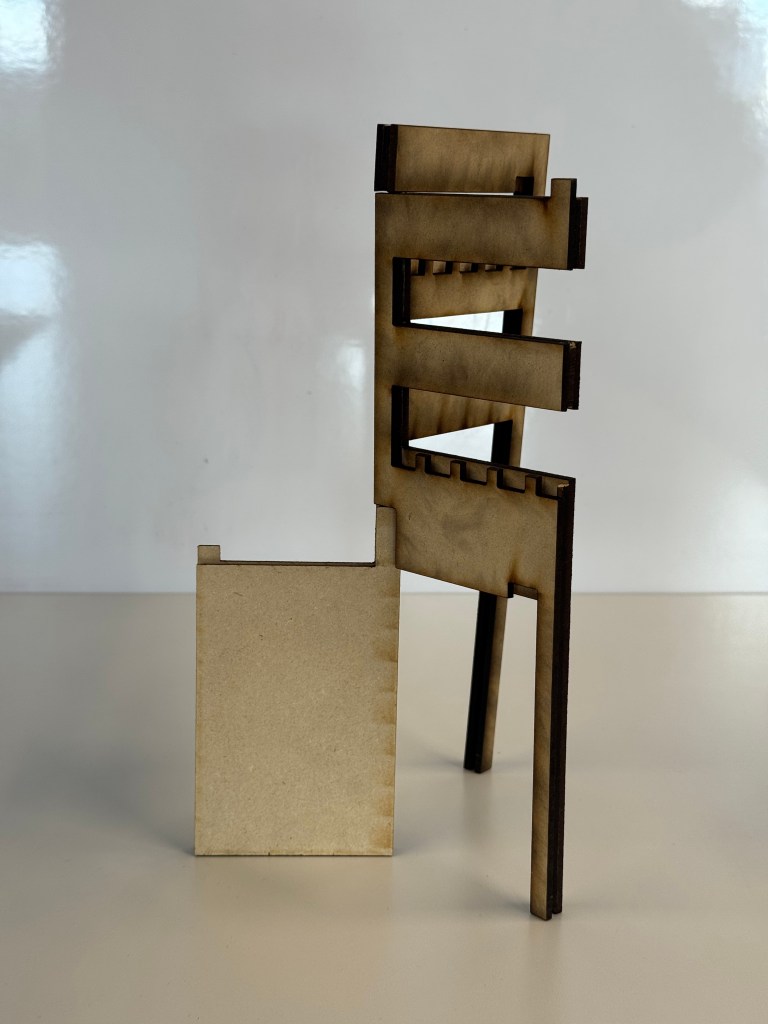
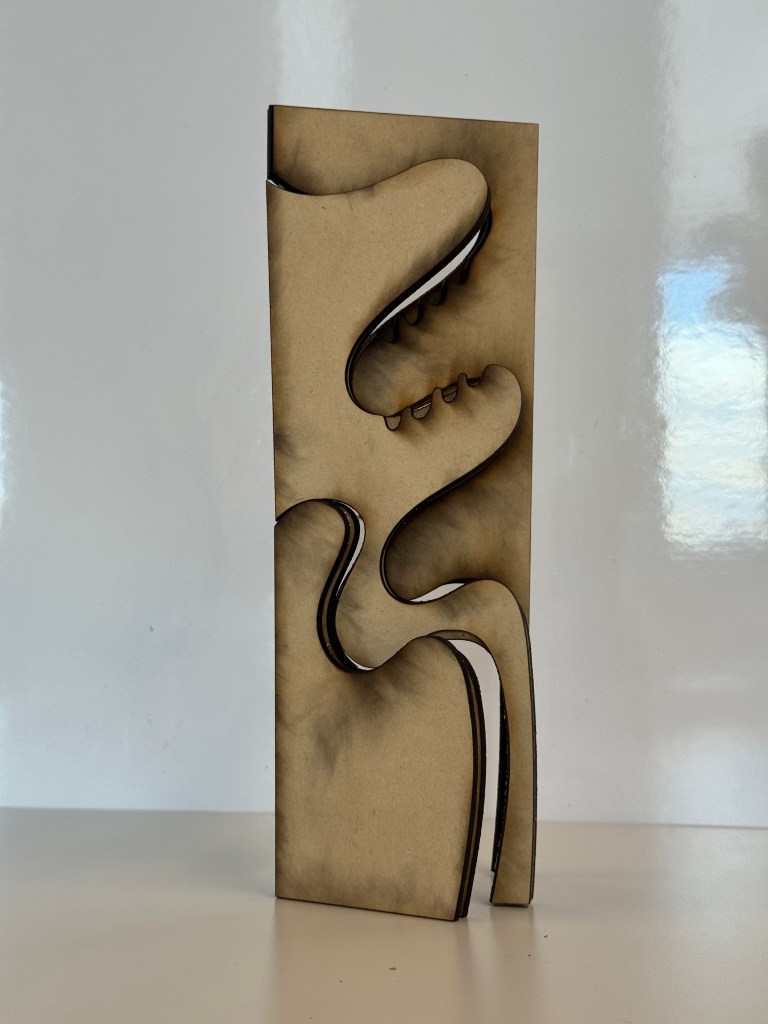
Workable Prototype

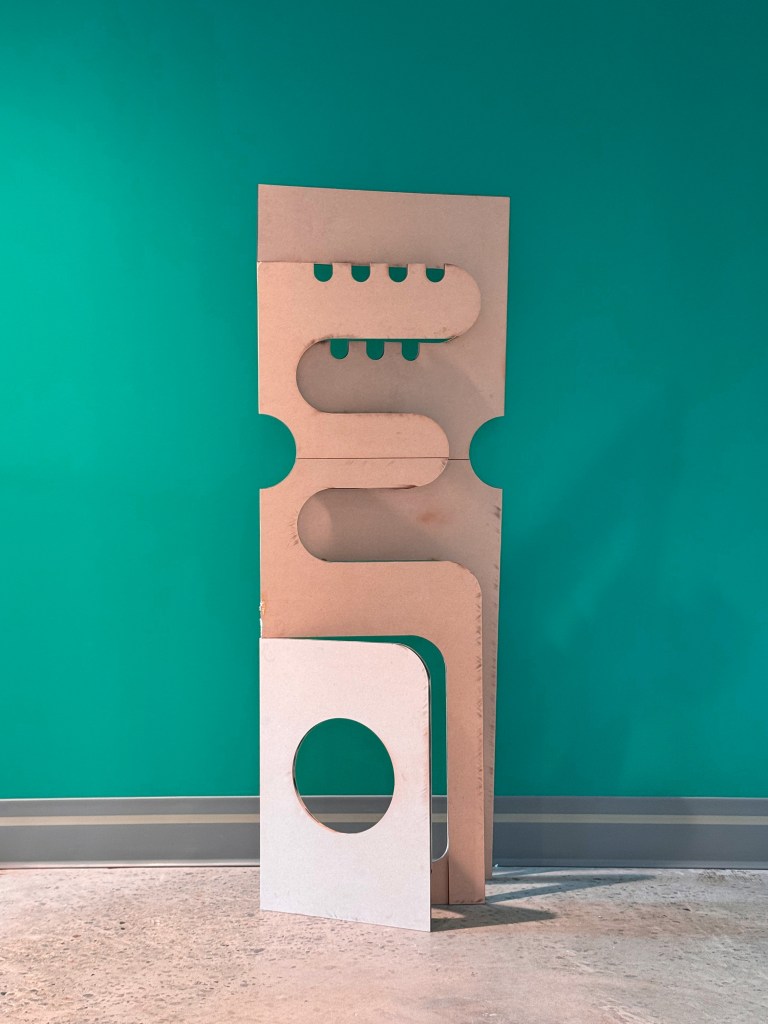
Finally, I chose a combination of the two visual styles, and added some modernism and Bauhaus element that I’m used to in the final CAD file. I laser-cut two layers of 1/8” MDF and glued them together. I used two 10” aluminum rods as the pivot.



User Testing
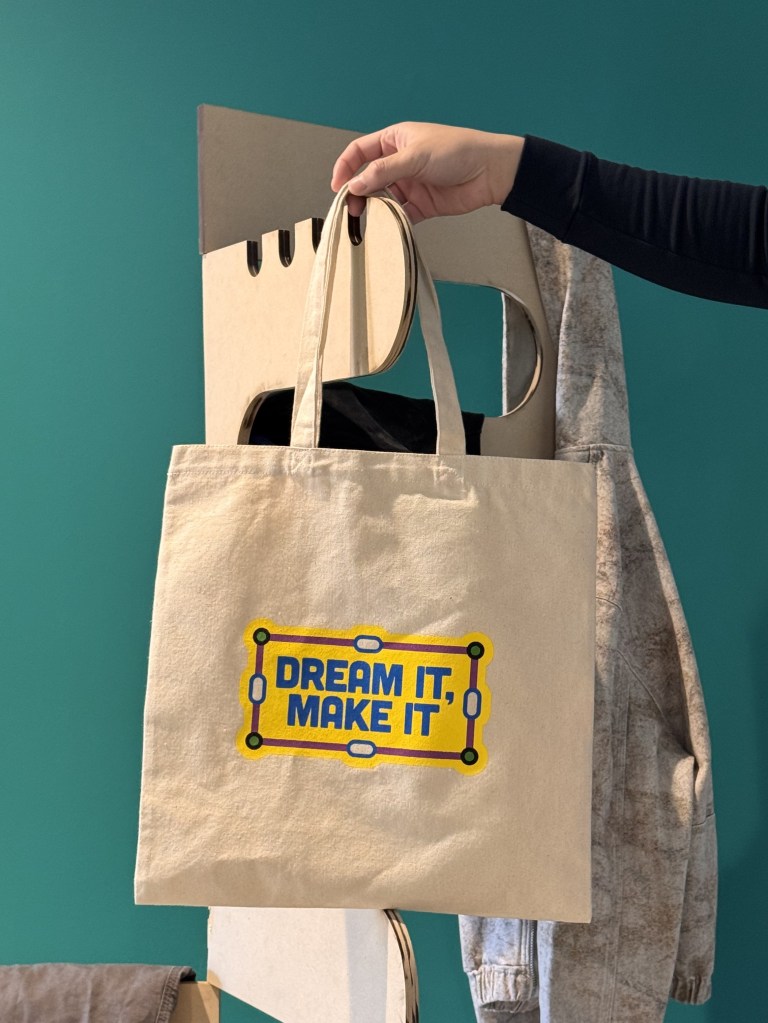
I gathered purchasing intention from several target users, and they agreed that Stacker is a desirable solution for tidying clothes placed on couches, chairs, or the floor. I conducted user testing in a simulated living room setting, and the results showed that the MDF Stacker prototype is: (a) able to stand on its own weight at different opening angles, indicating that the physical structure is valid; (b) able to hold multiple garments; and (c) able to be lifted and moved by hand when closed.
While most of the hypotheses were validated, I also received feedback that pointed to areas for improvement in future iterations. I would explore using a more porous and lighter-weight material, improve the reliability of the hinge, bevel the corners of the hooks, and apply more diverse CMF options.
Visualization

 JIHONG ZHAO